Classic Slots Online in the UK: How They Work
 Available in GB
Classic slots borrow the look of mechanical reels, while software determines results and the animation presents them on screen.
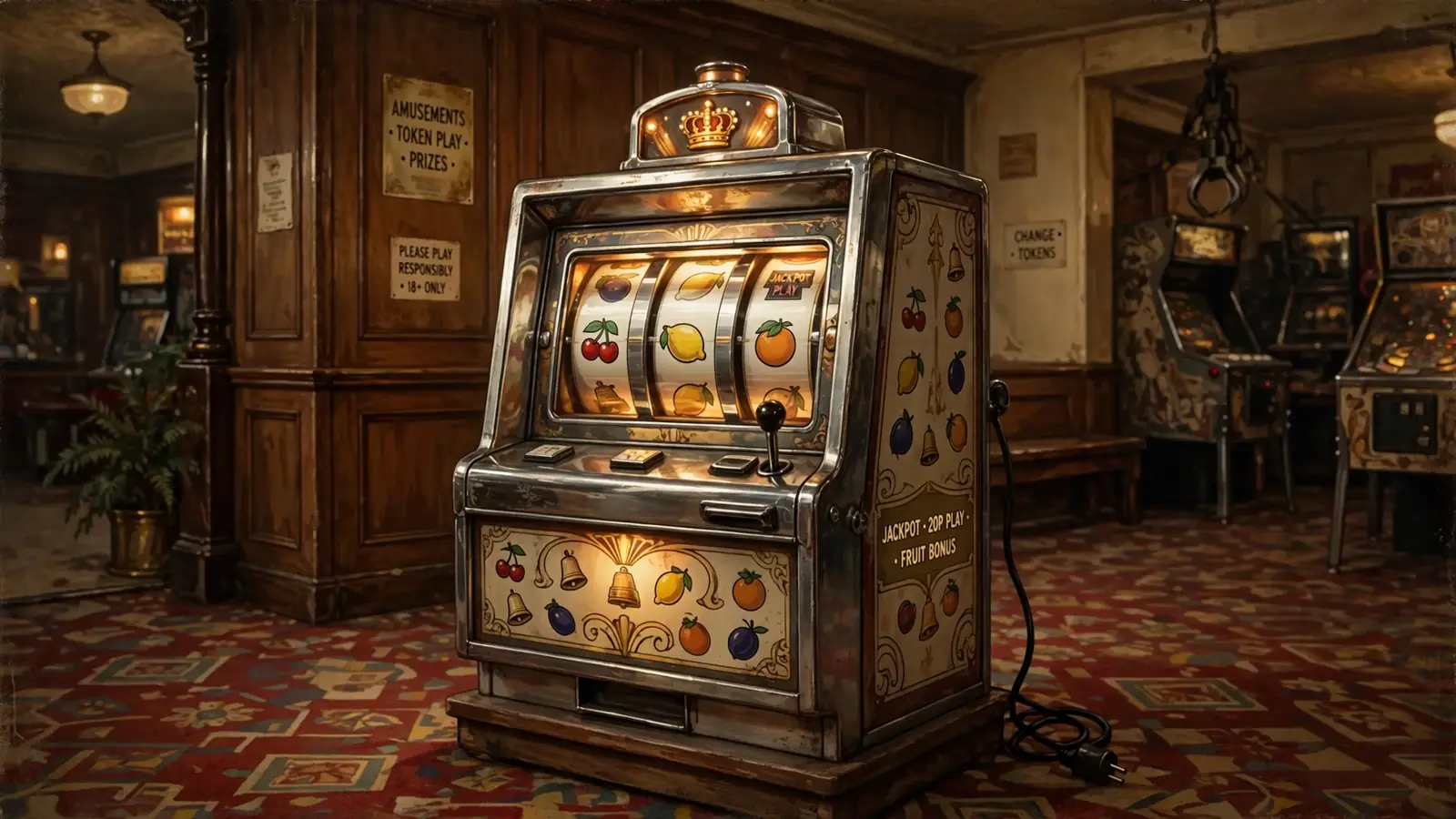
Table of Contents
- The Old Reels, Now Governed by Algorithms
- What a Classic Slot Machine Actually Does
- A “Best” Slot Is Not a List
- How Classic Slot Games Make a Spin
- Playing Online: Small Choices, Fixed Odds
- Real-Money Play and the British Stake Limit
- Classic Slots in the UK’s Regulated Market
- Free Play Before Any Wager
- Fruit Machines: Holds, Nudges and Their Conditions
- Symbols, Lines and the Shape of a Win
The Old Reels, Now Governed by Algorithms
The classic slot has a face that seems to belong to another kind of room: a compact cabinet, a row of reels, familiar symbols passing behind a window. Online, that image survives as a design language. A classic slot may show three reels and borrow the visual grammar of the mechanical machine, even though its result is produced by software rather than by wheels turning inside a cabinet.
That difference is easy to miss because the screen performs the old gesture so neatly. Reels move, symbols settle, and the machine appears to have made a choice in public. In a regulated online game, however, the visible animation is not the authority on what has happened. The system behind it is. Some slots use a random generator, and licensed sites use Random Number Generators, usually shortened to RNGs, so that each spin is independent and unpredictable.
The distinction matters. A reel animation can be designed to make a result legible or dramatic, but it does not mean that the symbols were selected by a physical mechanism slowing down in front of the player. The movement belongs to the presentation; the random process determines the result. A familiar exterior, then, conceals a thoroughly contemporary interior. Old reels, new machinery.
That machinery has a particular public framework in Britain. The UK Gambling Commission oversees gambling activity in the United Kingdom, online casino activity included. For remote gambling offered to consumers in Great Britain, the Commission’s reach does not depend on where an operator keeps the equipment that runs its games. A server’s location does not move the regulatory boundary. The rule follows the service offered to the public.
This is a quietly consequential arrangement. Digital gambling can make distance look like an administrative detail: the game is on a screen, the operator may be elsewhere, and the spin takes place in a fraction of a moment. Regulation answers that apparent placelessness by attaching responsibility to the market being served. In Great Britain, the Gambling Commission is the sole regulator for commercial gambling. It grants operating licences to businesses and personal licences to individuals working in the sector.
Progressive Slots Online in the UK: How Jackpots Work
A licence does not turn a game into a mechanical object, nor does it make the old imagery more than imagery. It places the operator within a system of oversight. The player sees the reel; the regulator’s concern is also with the arrangements behind the reel, including the use of random outcomes in licensed online games. The screen is intimate, almost domestic. The rules are not.
This is why a search for classic slots online in the UK leads to a subject broader than nostalgia. The three-reel format is part of the appeal, but so is the conversion of a recognisable machine into a digital service governed by rules made for a modern market. The symbols may look borrowed from an older arcade or pub setting. The process that selects an outcome belongs to software, and the operator offering that software to British consumers sits within a licensing framework.
There is an irony in the contrast. The classic slot promises a small, comprehensible scene: reels, symbols, a result. Behind it lies an invisible sequence of computation and oversight. The player does not watch the random generator working any more than a passenger watches the signalling system on a railway. What can be seen is only the public face of a system designed to operate beyond the visible surface.
The independence of each spin also changes the meaning of the machine’s apparent memory. A run of results may invite the impression that the game is building towards something, or that a previous outcome has somehow altered the next. In regulated online slots, it has not: each spin remains separate and unpredictable. The old machine could be watched as an object with moving parts; the online version asks for a different kind of understanding. Its motion is theatre, while its result is generated elsewhere.
Online Craps Casinos UK: What Can Be Verified
That is not a reason to strip the classic format of its charm. Its directness is the point: a small visual vocabulary, repeated with the ceremony of a lever or a button. But the online version belongs to a world in which the mechanism cannot be inspected by eye and trust must be organised through licensing and regulation. The age of the reels is mostly a matter of style. The governing logic is current.
What a Classic Slot Machine Actually Does
A classic slot machine is organised around a simple question: which symbols have appeared, and do they form a recognised arrangement on an active line? Its familiar layout may look spare beside a modern game crowded with panels and animations, but the apparent simplicity leaves room for an important choice. Some classic slot machine games let players select how many lines are active before play.
A line is a route across the reels that the game treats as eligible for a win. The route may run straight across, or follow a pattern that steps up and down between reels. The symbols themselves provide the visible language; the lines decide which sequences the game will count. A matching group outside an active route may therefore have no effect on the result, even when it looks promising to the eye.
This distinction is easy to miss because the screen presents symbols and lines together. The eye tends to gather nearby images into a pattern, while the game follows its own marked routes. A pair of matching symbols can seem meaningful without completing a winning arrangement, and a less obvious sequence can count if it occupies the right positions on an active line. What matters is not simply whether symbols match, but how they are placed in relation to the lines the game recognises.
Penny Slot Machines in the UK: Costs and Play
The number of active lines is one of the few settings that may be available in a classic slot machine. Some titles allow it to be changed manually; others present a fixed arrangement. Where the choice exists, the setting defines which routes are included when the game evaluates the symbols. It does not rewrite the symbols after they appear. It changes the scope of what counts.
That makes line selection a structural decision rather than a prediction. Choosing more routes brings more possible arrangements into consideration, but it does not tell the game what those arrangements will contain. Nor does activating a route make its symbols more likely to match. The distinction is between eligibility and outcome: a line can be counted without producing a win, just as an attractive-looking combination can fall outside the routes in play.
Classic slots online may display active lines as bright paths, numbered marks or highlighted positions across the reels. The visual treatment varies, but its purpose is practical: to show which patterns are included. A player who can change the setting may see the highlighted paths alter before play begins. That small adjustment can make the rules easier to read, particularly in a game whose paytable uses several routes rather than only a straight line.
A paytable is the game’s account of which symbol combinations qualify and what they pay. It is not a general promise that matching images will produce a return. The game’s rules connect a particular arrangement to a stated result, and the slot’s winnings depend on which symbols the player lines up. Reading the paytable alongside the active-line display is therefore more useful than judging a result by appearance alone.
There is a quiet history in this design. The line is a machine’s way of turning a strip of pictures into a rule: these positions belong together; those do not. The old visual grammar survives in online classic slot machine games, even when a screen replaces the cabinet and buttons. The symbols may be familiar, but the machine still needs a formal way to decide whether they form a result.
Do
- Read the paytable to understand winning combinations
- Check the active-line display to see which patterns count
- Adjust line settings manually if the title allows it
Don’t
- Judge a result by the appearance of symbols alone
- Assume any matching group outside an active route wins
- Mistake line selection for a way to predict outcomes
This is why a classic 3-reel slot machine should not be understood as merely a row of pictures waiting to match. Its layout is a compact set of conditions. Reels show the symbols; active lines define the paths that can qualify; the game’s rules connect qualifying arrangements to winnings. In a title with adjustable lines, the player chooses the range of patterns the game will assess, not the pattern that will appear.
The settings can make two classic slot machines feel different even when both use a restrained design. One may keep its lines fixed and leave little to adjust. Another may put line selection in the player’s hands, making the route structure more visible. Neither arrangement changes the basic principle: a win is determined by the symbols lined up along a recognised, active route. The details belong to each title, not to the word “classic”.
For that reason, the most useful way to read a classic slot machine is as a small rule system rather than a promise of familiar pictures. Its apparent simplicity can hide a precise distinction between a line that is active and one that is merely visible. A setting matters because it tells the game what to count. The symbols supply the answer.
A “Best” Slot Is Not a List
The word “best” suggests a neat ordering: a row of games, perhaps a row of casinos, each placed above or below its rivals. Classic slots resist that tidy arrangement. A title may suit one player and leave another cold; an offer attached to it may look generous until its conditions are read. Without a defensible basis for ranking games or operators, a list would be decoration pretending to be measurement.
ELK Studios and Amatic Casinos in the UK: A Guide
A more useful comparison begins with the terms attached to an offer. Some casino promotions come with wagering requirements: a player must make qualifying bets before bonus-related winnings can be withdrawn. The headline may foreground extra spins or a bonus balance, while the conditions determine what those extras amount to in practice. The offer and its small print belong in the same frame.
One bonus condition states that the bonus must be wagered thirty times before withdrawal. That is a particular term, not a universal rule for classic slots or a standard shared by every casino. A separate specialist review reported a promotion involving twenty-five extra spins on Sharkanade Slot, conditional on meeting a forty-times wagering requirement. That report describes one offer as presented there; it should not be mistaken for a standing feature of the game or a settled pattern across the market. Promotions change. The wording matters.
The distinction is easy to lose because casinos often present a game and an incentive together. A familiar reel design can lend an offer a sense of simplicity: the game looks legible, the bonus sounds immediate. Yet the promotional condition concerns the offer, not the game itself. A slot’s name cannot explain when a bonus becomes withdrawable, and an attractive number of spins does not answer how the requirement is calculated. Those details live in the terms.
Attention: Bonus offers often come with wagering requirements, such as thirty or forty times the amount, before winnings can be withdrawn.
For that reason, comparing a classic-slots casino is less like judging a cabinet by its paintwork and more like reading the label on a contract. The relevant question is not merely whether an offer exists, but what must happen before it can be converted into withdrawable winnings. A bonus can be a genuine feature of a promotion while still carrying conditions that change its practical value. Both statements can be true at once.
The same care applies when a promotion names a particular title. The presence of a game in a casino does not, by itself, establish that it qualifies for every bonus. An offer tied to selected games should be understood through its own eligibility wording, rather than by assuming that a classic-looking title is included. Game catalogues and promotional rules are different documents, even when they sit close together on a screen.
A ranked list of “best” classic slots would also blur unlike things. A game and a casino are not interchangeable objects of comparison. The game is the title being played; the casino is the venue presenting it and, potentially, a promotion around it. Calling one the best classic-slot casino because it displays a popular title would skip the question that matters here: whether the terms of its offer are clear and what they require. A list that cannot establish those distinctions offers confidence without information.
There is a social habit behind the appeal of rankings. Lists make choices feel settled, as if a complicated decision has already been made elsewhere. But a promotion is a small piece of commercial language, and its value depends on its conditions, not on its position in a table. Reading those terms is less glamorous than collecting badges and scores. It is also more useful.
For classic slots played for real money, the offer should therefore be treated as a separate decision from the game. The number of extra spins may catch the eye; the wagering requirement tells a different part of the story. Neither replaces the other. Where a promotion includes a requirement before withdrawal, that fact belongs near the description of the offer, not hidden behind a broad claim that a casino is “best.”
A credible comparison need not pretend that every player values the same thing. It can distinguish a game from a promotion, report a specific condition without turning it into a market-wide norm, and avoid awarding a crown unsupported by evidence. Less theatrical, perhaps. More honest.
Amatic Online Casinos UK: Games and Operators
How Classic Slot Games Make a Spin
A classic slot game turns a brief motion into a readable result. Reels move, symbols appear in a new arrangement, and the game assesses what has landed. The essential connection is simple: winnings depend on which symbols the player lines up. The picture is not decoration placed around a separate result; it is how the result is shown.
That simplicity is part of the format’s durability. A row of familiar images can be understood at a glance, even when the rules behind a particular title differ. The player sees a changed arrangement, then reads it according to that game’s own terms. A spin is therefore both an event and a small act of interpretation: the symbols have to be considered in relation to one another, not merely counted as isolated pictures.
The word “classic” can suggest that every game follows the same pattern. It does not. One title may use a spare display, another a busier one; the symbols and the arrangements that matter are set by the individual game. What carries across the category is the compact form: a spin produces a visible layout, and that layout is evaluated under the game’s rules. Familiarity with the format is not the same as knowing the rules of every title.
This distinction matters because the eye tends to invent a system before it has been given one. A pair of matching pictures may look significant; a near match may feel as though it was almost a result. But what counts is not what seems suggestive to a person watching the reels. It is whether the symbols line up in a way the game recognises. A pleasing pattern and a winning one are not necessarily the same thing.
The game’s display is thus a kind of shorthand. It gives an immediate image of the outcome, while the title’s rules determine how that image is treated. A symbol has no universal value simply because it appears on a reel. Its meaning depends on the game in which it appears and on its place in the arrangement. The same visual motif can carry different significance across different classic slot games.
iSoftBet Casinos UK: Why Provider Checks Matter
There is also a useful separation between the spin itself and the surrounding offer. A promotional condition may govern whether an extra feature or bonus can be claimed, and a casino’s comparison page may describe its own terms. Neither changes the meaning of the symbols shown by a particular spin. The game outcome belongs to the game; promotional requirements belong to the promotion. Blurring those two layers makes an ordinary result harder to understand than it needs to be.
The same is true of comparisons between casinos. A site may present a selection of titles or promotions, but that presentation is not part of how a game evaluates its symbols. A casino comparison can help describe the setting in which titles are offered; it cannot turn one arrangement of symbols into another. The reels do not acquire a different meaning because a game appears beside a bonus banner or in a list of recommended titles.
That boundary gives the classic format much of its clarity. The spin is self-contained as a game event: symbols appear, the game’s rules are applied, and the result follows from the arrangement. Everything around it—promotional language, casino descriptions, editorial rankings—may affect how a title is presented, but it is not the result on the reels. An advertisement can be more elaborate than the game. It still cannot rewrite the symbols.
For anyone encountering a classic fruit slot game, the same basic principle applies. Fruit imagery may call up the visual history of arcade machines and pub amusements, but the theme alone does not tell the whole story. The game’s own rules decide which alignments matter and what they mean. Nostalgia supplies the scenery; the title supplies the terms.
This is why a spin should be read narrowly. It is not evidence that a particular game is better than another, nor does it settle whether an accompanying offer is worthwhile. It shows one arrangement within one game. A clear understanding begins there, with the symbols and the rules that give them meaning, rather than with the promises surrounding the machine.
A small event, carefully framed.
Playing Online: Small Choices, Fixed Odds
Playing a classic slot online can involve a modest decision before each spin: whether to keep the game’s existing line setting or change it. Some titles let players select the number of active lines manually. That control affects how the game is set up, but it does not turn the controls into a way of steering the random result.
In regulated online games, the timing of a button press or the size of a bet does not influence the random result, nor do past outcomes alter the probability of the next spin.
The distinction matters because an interface can make a choice feel more consequential than it is. A button responds; a reel animation starts; the screen gives the impression of a sequence being directed. Yet the timing of a press does not determine what appears. Nor does changing the size of a bet make a particular outcome more likely. On regulated online games, past wins and losses do not alter the probability of the next spin.
This is one of the odd inheritances of the physical machine. The old lever suggested a mechanical cause: pull, and the reels begin to move. Online, a tap or click serves the same theatrical purpose, though it is not a signal that can influence the result. The ritual remains; the supposed leverage does not.
Line controls are still worth understanding as part of a game’s ordinary layout. Where manual selection is available, the chosen setting stays relevant to how a spin is played. It is a practical preference, not a prediction. A player may alter it between spins, but no particular arrangement makes the random process favourable. The game’s visible controls offer choices about participation, not a method for reading what comes next.
Bet size can likewise feel like a dial on probability, especially when a small win follows one setting and a loss another. That sequence is not evidence that the setting caused the outcome. Random results can produce runs that look patterned; human beings are excellent at supplying meaning to a sequence after it has happened. The machine offers no special reward for patience, haste or a dramatic pause.
Amatic Games at UK Online Casinos: How They Work
Online play makes these gestures easy to repeat, which is part of its convenience and part of its peculiar theatre. The screen can be operated quickly, but speed does not improve the odds. A pause may change the pace of play; it cannot change the next result. The interface is responsive. Chance is not.
Real-Money Play and the British Stake Limit
A specialist review reports that online slots in Great Britain are subject to a maximum stake of £5 per game cycle for customers aged 25 and over. The boundary applies to the cycle of play, not to the name or appearance of a game: a classic slot remains an online slot when its reels are simple, its symbols familiar and its screen designed to recall an older machine.
That limit belongs to real-money play. It is not a measure of what a game may show in a demonstration mode, nor does it describe a potential win. A stake is the amount placed at risk for a cycle; the outcome is separate. Confusing the two can make a modest-looking interface seem less consequential than it is.
The distinction also explains why a cap is not a recommendation about how much to play. It sets an upper boundary for the relevant stake, rather than declaring that amount suitable for every player or every session. The machinery of a slot may repeat its visual ritual, but repetition does not turn a wager into a predictable expense.
Stake Limit
Online slots in Great Britain are subject to a maximum stake of £5 per game cycle for customers aged 25 and over.
Great Britain is the territory named in the rule. It should not casually be expanded into a statement about every part of the United Kingdom: gambling law and oversight have their own boundaries. Nor should the slot cap be treated as a general casino limit. It concerns online slots, not every game offered by a casino.
For anyone choosing real-money classic slots in the UK, the important point is therefore a narrow one: in Great Britain, the reported £5 maximum applies to each game cycle for customers aged 25 and over. The figure marks a ceiling, not a target. Dry distinction; useful one.
Classic Slots in the UK’s Regulated Market
Classic slots sit inside a market much larger than their modest visual language suggests. Three reels and familiar symbols may evoke a pub machine or a seaside arcade, but online they belong to a regulated commercial sector whose scale is measured across thousands of sessions and many kinds of games. The old style survives; the setting has changed.
Regulatory operator data reported £773 million in gross gambling yield from online slots between January and March 2026. Gross gambling yield is a measure of gambling revenue, not the amount players wagered and not a statement about what any individual won or lost. The figure covers online slots across the reported market, rather than classic slots alone. It therefore gives context, not a valuation of one small corner of the catalogue.
That distinction matters. A classic slot may look like a relic, but its online presence is part of a contemporary industry overseen by public rules. The UK Gambling Commission regulates gambling activity, including online casinos; businesses offering remote gambling to consumers in Great Britain must hold the relevant licence, wherever their key equipment is located. Regulation makes the market legible to the state: operators, revenue and consumer protections are not treated as private arrangements beyond scrutiny.
Pragmatic Play Online Casinos in the UK: What to Check
The broad total also says little about the character of play. A headline figure cannot show why someone returns to a spare-looking reel layout, or how nostalgia and routine attach to a game. It records the scale of a market, not the texture of the rooms and habits that once gave fruit machines their place in British life.
A large number, then. Not a story by itself.
Top online casinos in the UK
- SlotoSportBonus: 500% up to £ 10 200+ 777 FS · Payout speed: 1-3 business days
- x3betBonus: Welcome Pack 100% Up to £1.000 + 200 Free Spins · Payout speed: 1-3 business days
- DieselwinBonus: Welcome Pack 250% up to £4000 + 200 FS · Payout speed: 1-3 business days
- WinBeastBonus: €5000 + 500 FS + €650 Freebet · Payout speed: 1-3 business days
- JetsetspinsBonus: 200% Bonus + 100 Free Spins + Free Royal Wheel · Payout speed: 1-3 business days
- SpinFormulaBonus: 550% Up To £15,000 + 550 FS · Payout speed: 1-3 business days
- NightLuckBonus: Welcome Pack + 805% Up To 6400€ + 280 FS · Payout speed: 1-3 business days
- ChanzeBonus: Slots Welcome Bonus #1 200% up to €500 · Payout speed: 1-3 business days
- ZombillionBonus: Welcome Pack 250% up to £4000 + 200 FS · Payout speed: 1-3 business days
Free Play Before Any Wager
A classic slot can often be explored in a demo version, where the point is familiarity rather than a stake. This gives the game room to be understood before money enters the picture: its layout becomes less mysterious, and its features can be inspected without wagering.
That distinction matters. A demo is a way to learn how a particular title is arranged, not a rehearsal that makes later results predictable. The screen may be familiar by the time real play begins; the outcome of a later spin is still not something practice can forecast. Familiarity is useful, but it is not foresight.
There is a small social history in the idea. The old machine asked for a coin before it offered its spectacle; an online demo separates the spectacle from the payment. The player can look first. That is a modest change, but a meaningful one in a market where gambling is regulated and where the boundary between trying a game and wagering on it should remain clear.
Using a free version of a classic slot can also help establish whether its presentation and features make sense before any decision to play for money. It need not become a test of skill or a search for a lucky pattern. The machine’s interface is what can be learned; chance does not become more obedient through observation.
For play involving deposits, setting financial or time limits is recommended. Those controls belong to the wider practice of keeping gambling bounded, while a demo offers a separate, simple use: seeing how a game works before wagering begins.
Look first. Stake later.
Fruit Machines: Holds, Nudges and Their Conditions
Fruit machine games carry a particular memory: bright fruit, familiar symbols and a physical cabinet whose buttons seemed to offer a small conversation with chance. Online, that vocabulary survives, though its features are not uniform. A classic fruit slot may include holds or nudges, but their presence and operation depend on the individual title.
A hold can keep a reel’s displayed position while the remaining reels change. A nudge can move a reel by a step, altering which symbols sit in view. These features give a spin an extra decision point, or at least the appearance of one: the game’s rules determine what can be held or moved, and when. The names are simple; the conditions may not be.
Some online fruit machine games make more than one hold or nudge available during a single spin. In other titles, the feature appears only when particular conditions are met. There is no single rule shared across the category, so an old-fashioned expectation—every machine behaving like the one remembered from a pub or arcade—can mislead. The cabinet has travelled; its customs have not all travelled together.
That variation matters more than the familiar imagery. A title may advertise holds and nudges, yet the feature’s exact role is shaped by its own rules. The game information is where those terms acquire practical meaning: whether an option is available on a given spin, and what action it permits. The distinction is small on screen, but it separates a feature that can be used now from one that belongs to a different circumstance.
Online versions preserve the gestures of fruit-machine play without promising a fixed ritual. One title may offer several interventions at once; another may make them conditional. Chance remains the setting, while the interface decides which choices appear. The familiar buttons, in spirit. The fine print, as ever.
Symbols, Lines and the Shape of a Win
A classic slot machine speaks through a small, repeated vocabulary of pictures. Fruit, bells, bars and sevens belong to the familiar visual tradition, though any particular game may choose its own set. Their purpose is not merely decorative: each image gives the reels a recognisable character, while the arrangement of images supplies the meaning of a result.
The important detail is the pattern, not a symbol in isolation. A single picture may carry no particular significance unless it appears in the required position alongside others. A winning result depends on which symbols are lined up, so the same image can form part of a win in one arrangement and not in another. The reels are a little theatre of repetition; the line is where the plot becomes legible.
That distinction can be easy to miss when the symbols are large and brightly coloured. A familiar bell or fruit may draw the eye, but appearance alone cannot establish what a combination pays. The game’s own paytable sets out the combinations it recognises and the value attached to them. It is the useful translation between the artwork and the rules: a way to see what the game counts, rather than guessing from a picture.
Classic slot machine symbols also preserve a trace of the physical machines from which the format grew. Their bold, simple shapes had to be understood at a glance; online, the same clarity still helps a player read the reels. Yet a nostalgic image does not make every title follow one universal scheme. The symbol set and its winning combinations belong to the individual game.
So the eye may settle on a lucky-looking emblem, but the result is made by the whole arrangement. Pictures first. Pattern next.
Can I play fruit machine games for free?
Yes, demo versions let you try a game’s layout and features before wagering.
Are online fruit machine games fair?
Licensed sites use Random Number Generators (RNGs), so spins are independent and unpredictable. Past results, timing and stake size do not change the odds of the next spin.
What are the online slot stake limits in Great Britain?
For customers aged 25 and over, the limit is £5 per game cycle. This limit does not apply to roulette or blackjack.
Are there age restrictions to play online fruit machines?
Yes. You must be at least 18 to gamble online, and operators verify your age and identity when you open an account.
What controls help manage my play?
You can set deposit or time limits. Demo versions are also available to help you learn a game before wagering.
Created by the ”mr Play” editorial team.