UK casinos and bank cheques: what the evidence shows
 Available in GB
A bank cheque and a Pay by Phone deposit use different payment systems, so evidence for one cannot confirm acceptance of the other.

Table of Contents
- The cheque question, and the payment method the evidence actually covers
- Who regulates online casinos in Great Britain
- Why Boku has become harder to find
- What happens at the cashier
- Small transactions, operator-set ceilings
- The deposit comes through the phone account
- Deposits are not withdrawals
- Pay-by-mobile services beyond Boku
- Bonus terms can change the value of a deposit
- Compliance concerns and the limits of what can be claimed
The cheque question, and the payment method the evidence actually covers
A bank cheque and a Pay by Phone deposit belong to different payment systems. A cheque is a bank instrument; Boku places a casino deposit on a mobile phone account. The two should not be treated as alternative names for the same service, and a casino listed as accepting Boku has not thereby been shown to accept cheques.
That distinction matters when looking for online casinos that accept bank cheques in the UK. A payment option needs to be confirmed as the method it claims to be, rather than inferred from an operator’s acceptance of some other form of payment. Information about Boku describes deposits made through a mobile network. It does not establish that a casino will take a paper cheque, or that a cheque can be sent to a casino and credited to an online account.
For that reason, a list of Boku casinos cannot honestly be presented as a list of UK online casinos that accept bank cheques. Nor does naming a casino make its payment options current or universal: methods can vary between operators and may change. The cashier is the place to establish which methods an operator currently offers, while the casino’s terms explain any conditions attached to them. If a cheque is not clearly identified there, a different payment method should not be relabelled as one.
Boku is relevant because it is a form of Pay by Phone used for casino deposits. It lets a customer make a payment through a mobile phone account, rather than by writing a cheque. That is a useful distinction for anyone comparing payment choices, but it answers a different question. A search for cheque deposits is not answered merely by finding a casino that accepts a phone-billed payment.
Some specialist reviews identify Jackpot Mobile Casino and Peachy Games among a small set of sites associated with direct Boku deposits. Those names are examples of reported Boku availability, not confirmation of cheque acceptance and not a dependable directory of current cashier options. The distinction is especially important where payment information changes: a listing can describe a particular method without proving that another one is available, or that the listed method remains available at the time of deposit.
Casinos That Accept E-Cheques in the UK
A casino’s name, familiar branding or payment logo is not a substitute for checking its legal status. Before depositing, the operator’s UK Gambling Commission licence should be checked on the Commission’s public register, including the licence number. A licensed operator serving Great Britain is subject to the local regulatory framework; an operator that merely presents itself as available to British customers is not thereby established as licensed. The check is a practical part of deciding whether to use a site, not a payment detail.
There is a further reason not to compress unlike methods into one category. Boku is a digital transaction routed through a mobile network, while a bank cheque is a separate banking instrument. The fact that both might ultimately move money does not make them interchangeable at a casino cashier. A payment method has to be explicitly offered and its conditions made clear by the operator. Without that confirmation, calling a site a cheque-accepting casino would overstate what its payment information shows.
The phrase “best UK casinos that accept bank cheques” therefore needs care. Ranking operators would imply that their cheque facilities had been established and compared. Boku-related listings cannot support that implication. At most, they point to casinos associated with a particular Pay by Phone route; they do not settle whether any of those operators accept a bank cheque. The same caution applies to broad claims about cheque deposits across UK online casinos: a method should not be assumed from a neighbouring category or a similar-sounding payment description.
The reliable starting point is narrow. Boku is a mobile payment option, and some specialist reviews have associated a small group of casinos with it. That information may help distinguish Pay by Phone from other deposit routes, but it does not verify cheque payments. Before money is deposited, the operator’s current cashier and terms need to be checked, alongside its UKGC licence on the public register.
Different instrument. Different claim.
A casino’s acceptance of Boku or other phone-billed payments does not establish that it accepts bank cheques; these are different payment systems.
Top online casinos in the UK
- SlotoSportBonus: 500% up to £ 10 200+ 777 FS · Payout speed: 1-3 business days
- x3betBonus: Welcome Pack 100% Up to £1.000 + 200 Free Spins · Payout speed: 1-3 business days
- DieselwinBonus: Welcome Pack 250% up to £4000 + 200 FS · Payout speed: 1-3 business days
- WinBeastBonus: €5000 + 500 FS + €650 Freebet · Payout speed: 1-3 business days
- JetsetspinsBonus: 200% Bonus + 100 Free Spins + Free Royal Wheel · Payout speed: 1-3 business days
- SpinFormulaBonus: 550% Up To £15,000 + 550 FS · Payout speed: 1-3 business days
- NightLuckBonus: Welcome Pack + 805% Up To 6400€ + 280 FS · Payout speed: 1-3 business days
- ChanzeBonus: Slots Welcome Bonus #1 200% up to €500 · Payout speed: 1-3 business days
- ZombillionBonus: Welcome Pack 250% up to £4000 + 200 FS · Payout speed: 1-3 business days
Who regulates online casinos in Great Britain
A casino’s payment options do not determine who supervises its gambling. In Great Britain, that role belongs to the UK Gambling Commission, the regulator responsible for commercial gambling, including online casino services. The important question is not where a company is based or where its servers sit, but whether it is licensed to offer remote gambling to people in Great Britain.
That principle matters when a payment method is part of the attraction. A site may describe itself as a UK casino, offer familiar payment routes or accept deposits from British customers; none of those details, by themselves, establish that it is authorised. The licence is the dividing line between a casino operating within the British regulatory system and one outside it.
What the Commission licenses
The Commission issues operating licences to businesses that provide gambling services and personal licences to individuals working in relevant operational roles. These are different forms of permission: the business licence concerns the operator’s right to conduct gambling activity, while personal licences apply to people whose positions fall within the licensing framework.
Remote gambling is included. An operator offering online casino games to consumers in Great Britain must hold the relevant Gambling Commission licence even if its key equipment is located elsewhere. The geography of the technology does not provide an escape hatch. A company may be headquartered abroad, but serving the British market brings the activity within the licensing framework.
Casinos That Accept E-Checks in the UK: What to Check
This is why a British-facing website should not be judged by its branding, currency, or the names of its deposit methods. Bank-cheque casinos in the UK, or sites claiming to welcome customers from Britain, still need the proper authorisation if they offer gambling to consumers in Great Britain. Payment language is a commercial detail; licensing is a legal one.
The distinction is especially useful where casino websites use broad claims about being international or available to British players. Availability is not proof of permission. Nor does the presence of a familiar brand name on a page settle whether the particular gambling service is covered by a current licence. The relevant operator and its licence status need to match.
Checking the licence
The UK Gambling Commission maintains a public register of licensed businesses and individuals. Before depositing, the operator’s licence number should be checked against that register. A casino’s own footer may display a number, but the number is only useful when it corresponds to the operator and permission listed by the regulator. A badge is not a substitute for verification.
This check also helps separate the business behind a casino from the website’s presentation. Casino brands can be operated by companies with different names, and the company named in the terms may not be the brand most visible on the home page. The register provides a way to check the licensed entity rather than relying on an impression created by marketing.
The Commission regulates remote gambling offered to Great Britain consumers regardless of where the equipment needed to run it is located. In practical terms, an operator cannot avoid the British licensing requirement merely by hosting its systems abroad. The rule follows the market being served, not the server room.
Do
- Check the operator’s UK Gambling Commission licence on the public register
- Verify the licence number against the regulator’s records
- Confirm the current payment methods in the casino’s cashier
Don’t
- Rely on branding, currency, or payment logos as proof of licensing
- Assume a site is licensed because it is available to British customers
- Trust a badge on a website as a substitute for register verification
There is a jurisdictional boundary worth keeping clear. The Gambling Commission’s remit described here concerns Great Britain; the Gambling Act 2005 governs gambling in England, Scotland and Wales, but not Northern Ireland. “UK” appears in many payment and casino descriptions as a convenient label, but it can blur differences in the legal framework. For checking an online casino under the British system, Great Britain is the precise territory.
A licence does not tell a player whether a particular payment method is available, whether a deposit qualifies for an offer, or whether a site accepts a cheque. Those are separate questions, and cashier menus can change. Licensing answers the prior question: whether the operator is authorised to provide gambling to consumers in this market. The payment method comes later.
The Commission is the sole regulator for commercial gambling in Great Britain. That does not mean every company connected to a payment transaction is itself a casino regulator; it means the gambling operator’s authority to offer the games is assessed within one licensing system. A bank, mobile network or payment provider may have its own responsibilities, but those do not replace the operator’s Gambling Commission licence.
For anyone comparing casinos said to accept bank cheques, the sensible order is therefore plain: establish that the operator is licensed, then confirm the payment method directly with that casino. A cheque claim cannot repair a missing licence, and a licence cannot establish a cheque facility. Two different checks.
Why Boku has become harder to find
Boku has become a less dependable feature of the UK casino cashier. Specialist casino-payment reviews describe operators moving away from it since 2023: some have replaced it with Fonix or Siru Mobile, while others have removed Pay by Phone options altogether. The shift is not simply a change of label. A casino that once offered Boku may now offer a different phone-payment service, or no phone-based deposit route at all.
Casinos That Accept Neosurf in the UK: Payment Guide
That makes old lists a poor guide to what a cashier offers today. Payment menus change, and a name appearing in a review does not guarantee that the method remains available to every customer or account. The sensible interpretation is narrower: Boku has been reported at a group of casinos, but availability needs to be checked with the operator before a deposit is planned.
Specialist reviews have associated Boku deposits with BoyleSports, Sun Bingo, William Hill, Sky Vegas, PlayOJO, Genting Casino, Betfred, Lottoland, bwin and 888 Casino. This is a reported set, not a complete directory or a promise that each brand currently displays Boku. Nor does it identify casinos that accept bank cheques. Boku is a phone-billed payment method; the reported operator names concern that method alone.
The list also shows why a single “best” label tells little about payment access. A familiar brand may appear in a review, yet the cashier is the practical test: the method must be present when an account is being funded. The category itself is in motion. Some operators have substituted another service, and some no longer offer phone payments, so a list can age faster than its wording suggests.
This is an awkward fit for the tidy directories that people expect from financial services. A bank transfer or card type can be described as a stable route; Pay by Phone depends on a particular arrangement between a casino, a payment provider and a mobile network. If one part changes, the option may disappear from the cashier even while old descriptions continue to circulate. The name of a casino, on its own, cannot settle the question.
Boku
A phone-billed payment method reported at several casinos, though its availability has decreased since 2023.
Fonix
A Pay by Phone service associated with operators such as MrQ and Duelz.
Siru Mobile
A mobile payment option reported to be used at Mr Vegas and Videoslots.
The movement away from Boku is therefore best read as a change in availability, not as evidence that every operator has made the same choice. Some reported casinos retain it; others have shifted to Fonix or Siru Mobile; still others have dropped the category. Those alternatives are not Boku under another name, and their presence does not establish that Boku is accepted.
There is a further distinction hidden by the wording of many payment searches. A request for casinos taking cheques concerns a bank payment instrument; a Boku listing concerns a charge routed through a mobile account. They serve different purposes and should not be merged into one list merely because both can fund a gambling account. A directory of Boku operators answers only the narrower question of where that phone-payment method has been reported.
A current cashier is more useful than a copied list, but even the cashier answers only the payment question. Before any deposit, the operator’s UK Gambling Commission licence should also be checked on the regulator’s public register. Payment availability and legal status are separate matters; neither establishes the other.
The remaining Boku names are thus clues, not a guarantee. As operators alter their payment menus, a brand’s past appearance in a specialist review can explain where to look, but not what will be available at the moment of deposit. The distinction is small on a page and decisive in practice.
What happens at the cashier
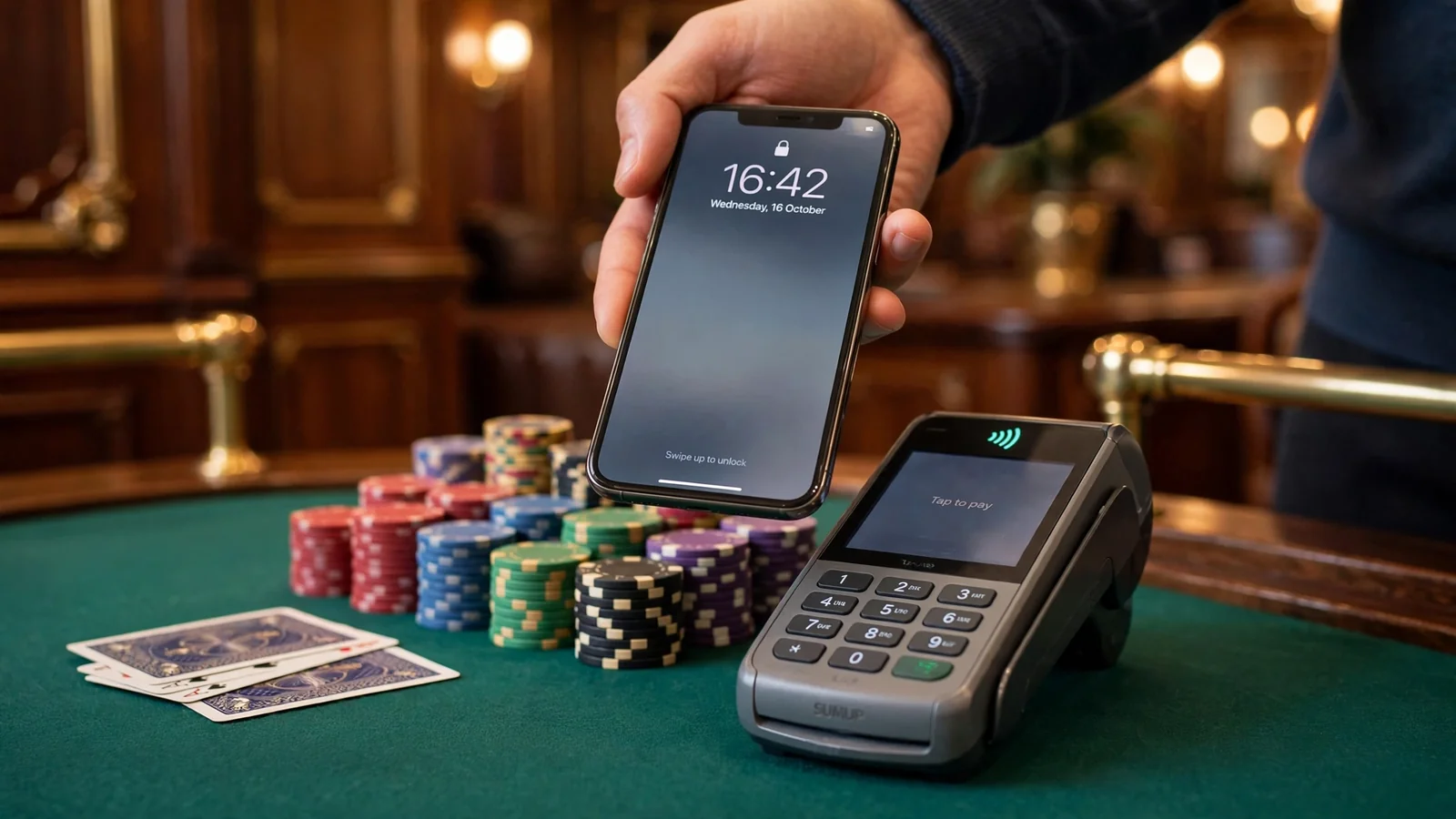
A Boku deposit is made from the casino’s cashier, not by handing over a paper cheque or entering bank-account details. Where Boku appears as a payment option, the process moves from the casino’s payment screen to a text-message confirmation. The distinction matters: a cashier that supports Boku is not thereby a casino that accepts cheque deposits.
Casinos That Accept MuchBetter in the UK: Payment Guide
The sequence is short. Boku is selected from the methods shown in the cashier, then the deposit amount and mobile number are entered. A verification code arrives by SMS; entering it confirms the payment. The phone number is therefore part of the transaction, not an incidental contact detail. Without access to the relevant handset and its messages, the final step cannot be completed.
The amount choices may also be narrower than the cashier’s other options. A specialist review describes Boku deposits as available only in amounts divisible by ten, giving £10, £20 and £30 as examples. That is a specific account of the method, not a promise that every operator’s cashier presents the same choices today. The amount menu displayed by a casino is the practical point of reference before confirmation.
This small ritual says something about the payment itself. A bank transfer asks the customer to move money between accounts; a card payment asks for card credentials. Boku instead links the casino transaction to the mobile number, then asks the network’s text message to stand as confirmation. The phone becomes both identifier and gatekeeper. Convenient, but not quite invisible.
A failed or missing SMS can interrupt the process before the deposit is confirmed. The sequence does not mean that selecting Boku alone completes a payment: the amount and number must be entered, and the verification code must be supplied. Nor does a text-message prompt turn the transaction into a cheque payment. It remains a Pay by Phone deposit, with the mobile account involved rather than a paper instrument.
Boku Deposit Process
Select Boku
Choose Boku from the available payment methods shown in the casino cashier.
Enter Details
Input the desired deposit amount and the associated mobile phone number.
Confirm via SMS
Retrieve the verification code sent via text message and enter it to complete the payment.
For someone comparing payment choices, the relevant detail is what appears in the cashier at the time of deposit. If Boku is not listed, the steps cannot be followed there; if it is listed, the available amount options and the requested number are visible as the transaction is set up. A payment label on a general information page is not a substitute for that checkout screen. Cashiers change; names on old lists tend to linger.
The SMS stage is also a useful point to pause. Before confirming, the amount entered should match the intended deposit, and the mobile number should be the one whose messages can be accessed. Once the code is entered, the transaction is being authorised through the phone route. It is not a bank cheque being cleared behind the scenes, and it should not be described as one simply because both methods move money into a gambling account.
The cashier’s sequence is therefore easy to summarise without confusing the payment with the search for cheque-taking casinos: choose Boku, enter an amount and phone number, then confirm with the SMS code. The amount increment detail comes from a specialist review and should be treated as a reported restriction, rather than a universal cashier rule. The screen itself remains decisive.
Small transactions, operator-set ceilings
Boku’s limits are not reported consistently, so a single figure should not be treated as a settled UK-wide rule. One specialist review describes a £30 ceiling for each deposit, with some casinos or mobile networks permitting £40 or £50. Other accounts put the per-transaction amount at about £10 and the daily network allowance at £30. A further version gives a £30 daily limit but does not specify a per-deposit cap.
Casinos That Accept Ukash in the UK: Payment Checks
Those descriptions disagree on whether there is a defined transaction ceiling, and on its size. The difference matters: a daily allowance and a maximum for one payment are separate restrictions. A player could, in principle, encounter both, but the available reports do not establish one universal combination. Neat figures, untidy terms.
The cautious reading is therefore not that every casino permits the same amount, nor that the highest reported figure is available everywhere. The figures are attributed to different accounts of Boku’s limits, and the terms may depend on the casino and mobile network involved. The amount displayed in a cashier is relevant to that operator’s transaction; it does not settle what the network will authorise across the day.
One specialist review also says that the daily ceiling is enforced by the mobile operator rather than the casino. That distinction separates the venue accepting a payment from the network carrying it. A casino may offer Boku and still be unable to make a deposit go through once the network’s allowance has been reached. The review’s account should not be mistaken for a rule that every operator applies identically.
For anyone comparing limits, the practical point is to distinguish three things: the maximum for one deposit, the amount allowed over a day, and any higher ceiling mentioned for particular casinos or networks. Reports that state only a daily figure cannot be used to infer a per-transaction maximum. Equally, a quoted transaction cap says nothing by itself about how many deposits the network will permit that day.
Boku deposit limits, such as per-transaction caps or daily allowances, may be enforced by the mobile operator rather than the casino.
This is a less tidy arrangement than a fixed cashier limit. The casino controls what it offers at its end; the mobile operator may impose its own daily restriction. A bank cheque has no bearing on these figures: they describe Boku, not cheque deposits.
The deposit comes through the phone account
Boku shifts the source of a casino deposit from a bank account to a mobile account. On a monthly contract, the payment is charged to the phone bill; on a pay-as-you-go plan, it is taken from the available prepaid credit. The distinction matters because the same payment button can draw on quite different household budgets: one amount appears with the bill, while the other reduces credit already held on the phone.
That makes Pay by Phone unlike a bank cheque, even though both can be described loosely as ways of paying without entering card details. A cheque draws on a bank account and depends on the cheque being accepted and processed. Boku instead routes a casino deposit through the mobile network account. The phone is not merely a device for confirming payment; its account is the funding source.
For a monthly-billed customer, the deposit becomes part of the phone account’s charges. It is not a withdrawal from a bank account at the point of the casino transaction. The amount is associated with the mobile bill, so the practical question is whether that route is available for the particular account and casino. The cashier’s use of a mobile number does not turn the transaction into a cheque payment or establish that the casino accepts cheques.
Casinos That Accept Ethereum in the UK
A pay-as-you-go account works differently. The deposit comes out of prepaid credit rather than being added to a later bill. A specialist review describes the available balance as a ceiling: a user cannot put more into the casino through Boku than the phone account has left. That qualification is important, because prepaid credit is a finite pot already serving the ordinary purpose of keeping the phone active. A deposit may therefore be constrained before any casino-side consideration arises.
The phone account is doing two jobs here: it identifies the route for payment and supplies the funds. The balance is not a decorative detail. If it is insufficient, the intended deposit cannot be funded from that prepaid account; if the plan is billed monthly, the charge follows the bill route instead. Neither arrangement creates a bank cheque facility.
This is a small but telling piece of payment design. The casino cashier may present several methods as neighbouring options, yet the money behind them comes from different places and follows different account relationships. Boku belongs to the mobile account, whether that account settles through a monthly bill or through existing PAYG credit. A bank cheque belongs to the banking system. The names should not be blurred.
Deposits are not withdrawals
Boku is a one-way route into a casino account. It can fund a balance, but it cannot carry winnings back out. That distinction matters because a payment logo in the cashier can look like a complete banking option when it is only an entrance.
No Withdrawals
Boku is a one-way deposit route; winnings cannot be carried back out to a phone account and require a separate withdrawal method.
A separate withdrawal method therefore needs to be registered, such as a debit card, an e-wallet or a bank transfer. The casino’s own cashier determines which methods are available for withdrawals, and the method used to deposit does not automatically become the method for cashing out. With Boku, there is no return journey to the phone account.
This is where searches for a bank-cheque deposit can blur unlike things. A cheque is a banking instrument; Boku is a mobile-phone payment service. Neither the ability to deposit through Boku nor the presence of a withdrawal option establishes that a casino accepts cheques. The practical question for a player is not simply whether money can be put in, but how any resulting balance could be taken out.
A separate route has been described in specialist casino reviews: money can be added to Neteller using Boku, then Neteller can be used to deposit at a casino that accepts it. That is an indirect chain, not a Boku withdrawal. The casino receives a Neteller deposit; Boku does not become the channel for casino winnings, and the route depends on the services involved being available and accepted.
The distinction is easy to miss because payment systems often share a screen while serving different purposes. A deposit option answers how funds enter. A withdrawal option answers how funds leave. The labels may sit beside one another, but they do not promise matching functions.
Before depositing, the withdrawal method needs to be checked and registered with the operator. A balance that can be funded through a phone account still needs an accepted route out, and that route may involve a separate provider. A casino that offers Boku for deposits is not, by that fact alone, a casino that pays out through Boku—or one that accepts bank-cheque deposits.
Casinos That Accept WebMoney in the UK
The sensible sequence is plain: confirm the operator’s withdrawal options, register an eligible alternative, then consider the deposit method. Payment convenience at the entrance is little comfort if the exit has not been arranged.
Pay-by-mobile services beyond Boku
Pay by Phone is not a single payment system. Boku is one named option, while Fonix and Siru Mobile are separate services that may appear in a casino’s cashier. Their shared use of a mobile phone does not make them interchangeable: an operator’s acceptance of one does not establish that it accepts the others. Nor does any of these names mean that a casino takes bank cheques.
EE, O2, Vodafone and Three support Pay by Phone and Fonix. That describes support from the mobile networks, not a promise that every casino using one of those networks offers either payment route. Availability depends on the service presented by the operator, so the cashier is where the distinction becomes practical.
A specialist review associates MrQ and Duelz with Fonix, and Mr Vegas and Videoslots with Siru Mobile. These are reported operator-and-service pairings, not a complete or permanent directory. Payment menus can change; a casino’s current cashier is more useful than assuming that one mobile option stands in for another.
The names matter because “pay by mobile” can sound like a general feature, when the actual payment provider determines how a deposit is handled. A phone network may support a service, yet the casino may not offer it. Likewise, a casino listed with Fonix cannot automatically be described as accepting Boku or Siru Mobile.
Mobile Network Support
EE, O2, Vodafone, and Three support Pay by Phone and Fonix services, though this does not guarantee that every casino using these networks offers both routes.
For someone seeking a cheque deposit, these mobile services answer a different question. They identify ways to pay through a mobile account, not a route for presenting a bank cheque. The two methods should not be conflated simply because both can sit among cashier options. The label is not the payment.
Bonus terms can change the value of a deposit
A payment method appearing in a casino cashier does not settle whether a deposit qualifies for a welcome offer. Pay by Phone eligibility is set by each operator, and the offer’s terms may exclude it even when the payment itself is accepted. A specialist review identifies MrQ, Duelz, Mr Vegas and Videoslots as operators that accept Pay by Phone deposits for bonus eligibility; that is a limited, changeable snapshot, not a promise that every offer at those casinos includes the method.
The same distinction matters when a deposit is described as being made by cheque. Bonus rules concern the payment method actually used and the terms attached to a particular promotion; a reference to a cheque does not establish that a casino accepts cheque deposits or that such a payment would qualify. The cashier and the promotion’s own conditions answer different questions.
Welcome offers can also make a modest deposit look larger while attaching conditions to the extra funds. One specialist review describes a common structure in which the casino matches a deposit pound for pound, with the match capped at £100 and wagering set at 35 times the bonus amount. Those figures are an example reported by that review, not a standard imposed across UK casinos. The wagering requirement determines how much qualifying play is needed before bonus funds or related winnings can be withdrawn, so the headline match is only one part of the offer.
Expiry rules add another clock. The same type of review reports bonus funds with a 30-day expiry and bonus spins that expire after 72 hours. These are reported terms, not universal deadlines; an operator’s current promotion may set different conditions. Miss the stated period and the offer can lose its value, however generous it looked at registration.
The practical distinction is plain: payment acceptance and bonus eligibility are separate decisions. Before making any deposit, the promotion terms should be checked for the payment method, wagering conditions and expiry dates. Pay by Phone deposits may be excluded from welcome offers, so an accepted transaction should never be treated as proof that a bonus will be credited.
Compliance concerns and the limits of what can be claimed
Boku’s retreat from casino cashiers is sometimes mistaken for the effect of a regulator’s prohibition. That is not what happened: the UK Gambling Commission did not introduce a rule naming Boku as a banned payment method. Individual operators removed it over compliance concerns. The distinction matters. A change in a cashier can reflect a company’s assessment of risk, rather than a new legal ban applying across the market.
Nor does a phone-bill payment become a bank cheque because both can move money into an account. Boku charges a mobile account; it is a Pay by Phone service. It offers no basis for describing a casino as accepting cheque deposits. A claim about cheque payments needs to concern cheques themselves, not a different method with a similar purpose.
Bonuses add another layer of operator-specific terms. A specialist review reported that Boku deposits did not attract a dedicated bonus and that the platforms it assessed imposed no Boku-specific deposit restrictions. That is a limited account of those platforms, not a standing rule for every casino or offer. Bonus eligibility can still depend on the terms attached to an individual promotion, and pay-by-phone deposits may be excluded from welcome offers.
For anyone comparing payment methods, the useful dividing lines are plain: a phone charge is not a cheque, an operator’s compliance decision is not a UKGC ban, and a reported bonus condition is not universal. Casino policies can change; the cashier and promotion terms are the operative details. A small distinction, with practical consequences.
What are the deposit limits at pay by mobile casinos?
Boku’s standard UK limit is £30 per transaction, although some casinos or networks may allow £40 or £50. Mobile networks may apply a lower limit, typically about £10 per transaction and £30 per day; PAYG deposits are also limited by your remaining phone credit.
How to deposit with Boku at online casinos?
Choose Boku in the casino cashier, enter an eligible deposit amount and your mobile number, then confirm the payment using the SMS verification code. Deposits are charged to your monthly phone bill or deducted from your PAYG credit.
How does Boku work?
Boku lets you pay for a casino deposit through your mobile account: the amount is added to your phone bill or taken from your PAYG credit. It is deposit-only, so it cannot be used to withdraw casino funds.
What is the standard Boku deposit limit in the UK?
The standard limit is £30 per transaction, though some casinos or mobile networks may allow up to £40 or £50. Network-level limits can be lower, typically about £10 per transaction and £30 per day.
Written by the editors at mr Play.