5-reel slots in the UK: how the format works
 Available in GB
The five-reel layout creates a wider screen and more places for symbols to meet, without promising a particular result.
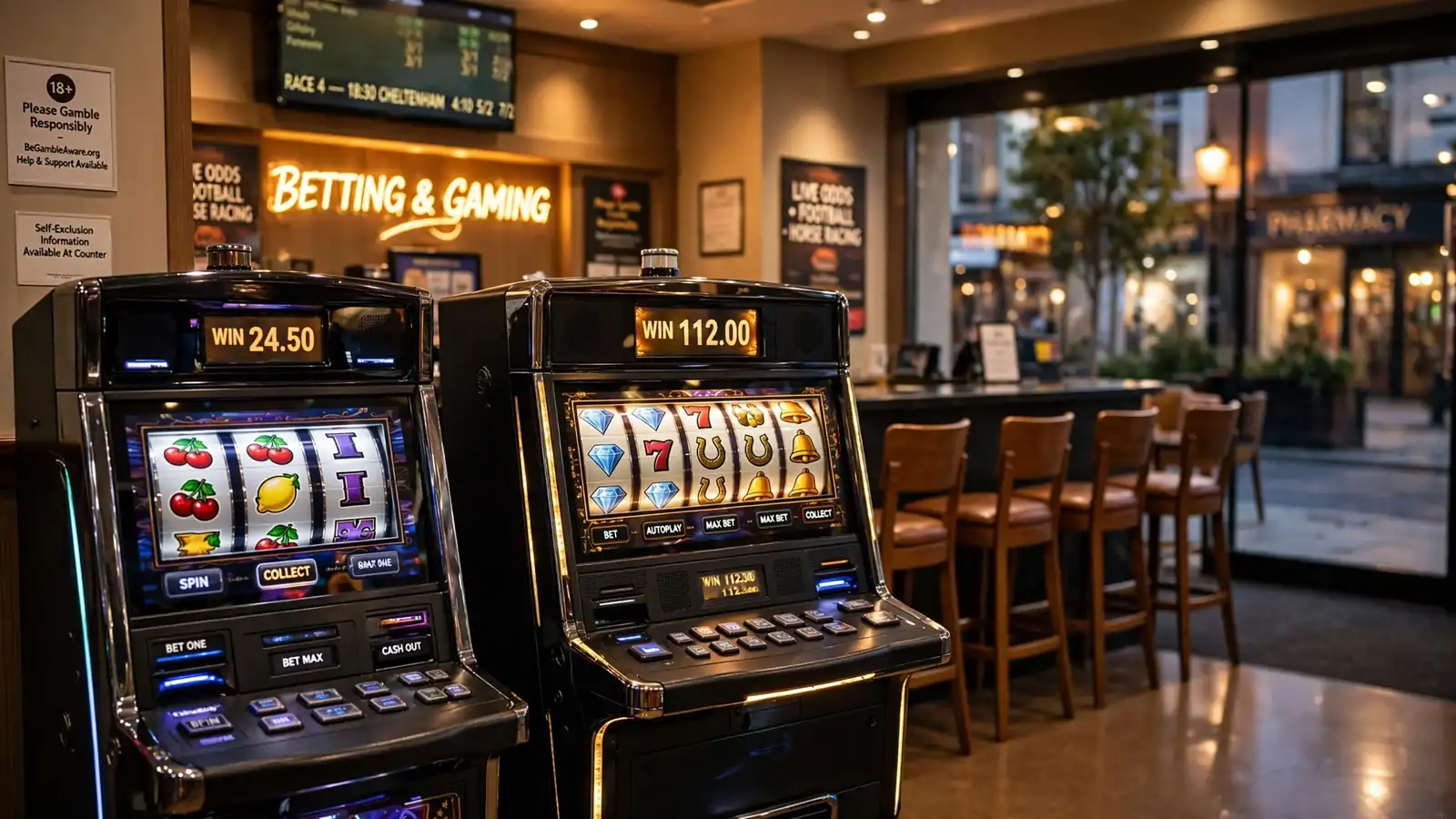
Table of Contents
- Five Reels, and What They Change
- The Game, the Machine, and the Shape of a Session
- Free Online Play: A Practice Run, Not a Payout
- Free Play and the Value of Pretend Money
- Bonuses, Multipliers, and the Small Print of Time
- Paylines: Where a Five-Reel Bet Can Travel
- Five-Reel Slots in an Online Casino
- Real-Money Play and the Rules Around It
- A Five-Reel Slot Is Still a Game of Expectation
- Features That Shape the Five-Reel Experience
Five Reels, and What They Change
A five-reel slot is defined first by its arrangement: five vertical reels sit side by side, each carrying symbols through the visible playing area. The format gives the screen a broad, orderly face. It also gives a bet room to travel across the full row of reels; a stake can be applied across all five, rather than being confined to a smaller arrangement. That is the basic distinction, before any particular theme, artwork or special feature enters the picture.
The contrast with a three-reel slot is immediately visible. Three reels make a compact frame, often associated with the older image of a fruit machine: a small window, familiar symbols and a direct visual line across the display. Five reels extend that frame. The added columns create more space for symbols to meet in different positions, and for designers to arrange the screen as a wider composition. It is a change in the machine’s geometry, not a promise about what a player will receive.
That distinction matters because the word “slot” can make different machines sound more alike than they are. The action may still be organised around reels turning and stopping, but the eye reads the two formats differently. Three columns suggest a contained little mechanism. Five suggest a field. One is not automatically simpler in every respect, nor is the other inherently more rewarding; the difference begins with how much of the screen is occupied by the reel layout.
The five-reel arrangement became familiar partly because it adapts well to a screen. On a computer or phone, a wider grid can hold a theme across the display: a landscape, a row of characters, or a collection of objects can be repeated and varied from column to column. The reels remain the organising structure, while the imagery gives the machine its particular character. A digital slot can therefore resemble a small illustrated stage, though the stage is still bounded by the same vertical strips.
Best RTP Casino Slots in the UK: RTP Explained
Three-reel slots carry a different kind of visual memory. Their compactness recalls physical machines in which a player looked through a limited window at a few moving bands. The symbols did not need a large canvas to be recognised. Their economy is part of the appeal: the frame feels familiar, and the design has little room to hide behind scenery. A five-reel game can preserve that old-fashioned style, but it cannot reproduce the same narrow architecture. It gives the classic idiom more space.
This is why “classic” and “five-reel” are not opposites. A game may borrow the visual language of a traditional machine while using five columns. Bells, fruit and other recognisable symbols can sit inside a broader grid without turning it into a three-reel slot. The look may nod to an older object; the layout belongs to a different format. Nostalgia is quite capable of moving house.
The extra columns also affect how a player reads the screen. In a three-reel design, attention tends to settle on a small set of aligned symbols. With five, the gaze has more ground to cover, moving from one side to the other and taking in a denser arrangement. The eye can scan horizontally, vertically, or simply take the whole field at once. This is a matter of visual organisation, not a statement about the frequency or size of wins.
That boundary is worth keeping clear. More reels do not, by themselves, explain how a game pays, how often it produces a result, or what a particular spin means. Those matters depend on the rules and mathematics of an individual game. The reel count describes the visible framework. It does not settle the character of a session, and it cannot turn a chance-based game into a predictable one.
Best Video Slots in the UK: How They Work
For anyone comparing online slots, the number of reels is therefore a useful first description, but a modest one. It tells what shape the machine takes and how broad its symbol field is. It does not tell whether the design is restrained or elaborate, whether its imagery feels antique or contemporary, or whether its rules suit a particular taste. Five reels are a format, not a verdict.
The British market contains both three-reel and five-reel designs, and the digital setting makes the difference easy to overlook: the same screen can hold a stylised cabinet, a cartoon world or a clean arrangement of symbols. Yet the underlying distinction remains visible. Three reels keep the frame tight. Five open it out, with a bet able to cover all five columns. That wider frame is the defining change.
The Game, the Machine, and the Shape of a Session
A 5 reel slot game is experienced less as a diagram than as a sequence: a stake is made, the reels settle, and the result either returns something or does not. The visible machine gives that sequence a familiar shape, even when it exists only on a screen. What distinguishes one session from another is not simply how often a result appears, but how those results are distributed.
That distribution is described as volatility. In a low-volatility slot, returns tend to arrive as smaller wins more often. A high-volatility game pays less frequently, with larger wins when they do come. Neither description says what will happen in the next spin. They describe the broad character of a game over repeated play, not a schedule that the machine follows.
High-Volatility Slots in the UK: What to Expect
The difference can be felt in the room’s imagined atmosphere. A low-volatility game may keep producing small signs of activity: a line of symbols that returns part of a stake, a result that interrupts a run of losing spins. In a high-volatility game, the quiet stretches can be longer, and the eventual larger result may carry more of the session’s movement. One rhythm is not necessarily more generous. It is simply more frequent in its modest interruptions.
Across most low-volatility titles, winning combinations typically appear every three to six spins on average. That is a description of a broad pattern, not a promise about any particular run. The average does not impose a timetable: several quiet spins can arrive together, and a win can come sooner than the pattern might suggest. The machine has no obligation to make a session feel evenly paced.
This matters because people read sequences as stories. A cluster of small returns can feel like momentum, while a stretch without a win can feel as though something is due. Neither impression changes the game’s underlying chances. A winning combination is an event in the sequence, not evidence that the next result has been made more likely by the last one. The machine’s rhythm is easy to narrate; it is not thereby predictable.
The older physical slot machine offered a compact theatre of waiting. The handle, the turning reels and the final pause made the result visible as a small mechanical drama. Digital 5 reel slot machines retain that theatre but can make the movement feel more polished and continuous. The screen supplies the familiar pause and reveal, while the player’s attention moves from one result to the next. The machinery is now mostly an image. The waiting remains real.
Low Volatility
Returns tend to arrive as smaller wins more often, creating a rhythm of modest interruptions.
High Volatility
Wins occur less frequently, but they typically result in larger payouts when they do come.
Volatility shapes how that waiting is remembered. Someone drawn to frequent small outcomes may find a low-volatility game less abrupt, though a return is not necessarily a net gain once the stake is considered. Someone choosing a high-volatility game may encounter a more uneven pattern, with fewer winning moments and larger swings when they occur. These are tendencies, not categories of certainty. Individual sessions can depart sharply from the broad profile.
The distinction also explains why two games that look similarly lively can feel very different to play. Animation, sound and the speed of the reveal shape the surface of a session; volatility shapes the pattern of returns beneath it. A quick sequence of visual events does not mean that wins arrive more often. Nor does a dramatic pause make a larger result more likely. The screen can make chance look composed. Chance has no such manners.
A sensible account of any 5 reel slot machine therefore needs to separate pace from outcome. The pace is what a session seems to offer: frequent small returns, long gaps, or a mixture that resists easy description. The outcome is the balance of stakes and returns, which may look different from the feeling of play. A run with plenty of winning combinations can still leave a player down if those combinations return less than the stakes put in. Activity is not the same thing as profit.
This is why volatility is useful as a description, but poor as a forecast. It helps explain whether a game tends towards many smaller wins or fewer, larger ones. It cannot identify when a win will arrive, guarantee that a run will match the typical pattern, or turn a losing stretch into evidence of an approaching recovery. Sessions have a shape in memory. They do not have a script.
High RTP Slots in the UK: What the Figures Mean
The digital machine’s chief illusion is not that it resembles the old cabinet. It is that each result seems to belong to a developing story, with a rhythm that can be read and perhaps answered. The broad rhythm is there, in the game’s volatility. The next result remains uncertain. A useful distinction, and an easily forgotten one.
Free Online Play: A Practice Run, Not a Payout
A free version of a five-reel slot has the outward shape of a game, but not the financial substance of gambling. The reels turn, symbols appear and the screen may show a balance changing. That balance is fictional. No cash is staked, and no payout is awarded. It is a rehearsal with the money removed from the room.
That distinction matters because a slot’s display can make different kinds of play look deceptively alike. A balance beside the reels may resemble a gambling account, and a celebratory animation may resemble a win with practical value. In free play, neither appearance changes the basic terms: the displayed credits are pretend money, and any result remains inside the game. A large figure on the screen cannot be withdrawn or converted into a real-money prize.
For someone trying free 5 reel slots online, the useful question is not whether the practice balance rises. It is what the no-stakes version makes possible to notice. The game can be opened and its general feel explored without putting money at risk. A player can see how its presentation works, decide whether its pace or style is appealing, and leave without a financial result to collect. The experience may inform a later choice; it cannot make that choice profitable.
Free play serves as a rehearsal where the financial risk is removed, allowing players to explore a game’s presentation and pace without staking real money.
That makes free online 5 reel slot games a different category of activity from real-money slots, even when the same title or familiar-looking interface appears in both. In real-money play, a stake has actual financial value and a result can affect the player’s funds. In free play, the balance is simulated and the result ends there. The difference is not a technical footnote. It is the line between testing a game and gambling on it.
The phrase “free” can also describe how a game is accessed rather than what its credits mean. A no-download version may run in a browser, while other versions may require an app or software installation. A no-registration option may allow access without creating an account, whereas another site may ask for one. “No deposit” can mean that a game is available without first putting money into an account; it does not turn fictional credits into withdrawable winnings. These labels describe possible routes into a game, not a promise that every operator offers the same arrangement.
So free 5 reel slot machines online can be convenient for trying the interface, but convenience is not the same as equivalence. A demonstration may not contain every account feature or circumstance found in real-money play. Nor does success in a practice session predict a later outcome. The pretend balance has no stake behind it, and it cannot establish that a real-money session would follow the same course. Practice can familiarise; it cannot forecast.
Live Casino UK: A Guide to Tables, Rules and Offers
This is particularly worth remembering when the screen presents a bonus or another conspicuous event. Free 5 reel bonus slots online may allow the feature to be seen in action, if the version includes it. But a bonus reached with fictional credits remains part of a simulation. It does not create a claim on money, even when its graphics and language imitate the rituals of a commercial game. The theatre is real; the prize is not.
There is no contradiction in finding a free version useful and recognising its limits. It can help someone decide whether a game is worth spending time on, and it can offer entertainment without a cash stake. It cannot demonstrate how a person will feel when money is involved, because that pressure is precisely what free play removes. Nor should a practice result be carried forward as evidence of a future return. A rehearsal is not a forecast.
The words attached to a game sometimes blur this boundary. “Free slots” may refer to a demo, a promotional offer, or a game that can be opened without an initial deposit; those are not interchangeable conditions. A free demo has no payout. A promotion, where offered, has its own terms and is not the same thing as pretend money. A real-money slot involves actual funds. Reading the label carefully is less exciting than watching the reels, but considerably clearer.
Do
- Use free demos to test the interface
- Read promotional terms carefully
- Verify the operator’s licence
Don’t
- Expect payouts from free credits
- Confuse demos with promotions
- Assume practice success predicts real wins
A free five-reel game, then, is best understood as a sample: a way to encounter a title before deciding whether to engage with it further. It offers no cash winnings and no financial proof of what might happen elsewhere. The distinction should remain visible even when the interface tries to make every version feel seamless. The balance is invented. The play is not a payout.
Free Play and the Value of Pretend Money
Free play changes the terms of a slot session before a reel moves. The balance on screen is fictional, and any amount it appears to grow into remains fictional too. No payout is awarded. That distinction is not a footnote; it is the boundary around the whole mode.
Free online versions of 5 reel slots can offer a way to spend time with a game without staking money. The appeal may be simple: seeing its presentation, getting a feel for its interface, or returning to a familiar form of entertainment without making a financial commitment. The activity can still occupy attention, but its displayed balance has no cash value. Pretend money stays pretend.
This can make free play useful as a form of exploration, though not as a forecast. A session may show how the game looks and responds, but it cannot establish what a later real-money session would return. Nor does a virtual balance become withdrawable because it has increased on screen. The display belongs to the entertainment, not to a player’s funds.
The distinction matters because slot language often uses the same visual signals for very different things. A balance rises; a win is announced; the game continues. In free play, those signs describe events inside a simulation. They do not create a claim on money. The screen may borrow the grammar of gambling, while the financial consequence has been removed.
Free 5 reel slots online therefore serve a different purpose from real-money play. They can provide access to a game’s look and feel, but they do not reproduce the financial stakes of gambling. Any confidence gained is limited to familiarity with the presentation, not knowledge of likely returns. A session with fictional funds cannot settle what a paid session would feel like, either; the knowledge that no money is at risk changes the experience.
Online Slots Payout Percentages: What RTP Means
There is also a modest cultural oddity in the arrangement. Gambling has long attached ceremony to chance: the wager, the turn, the visible result. Free play keeps the theatre and removes the transaction. It can be enjoyable on those terms, provided the distinction remains clear. A simulated win is an event in the game, not income.
For anyone choosing to play 5 reel slots free, the sensible measure of value is consequently not a pretend balance. It is whether the entertainment itself is worth the time. Free play offers no winnings to carry away and no financial result to bank. It offers a version of the game in which the money is an image, not an asset.
That is its limit. And its point.
Bonuses, Multipliers, and the Small Print of Time
A bonus round changes the terms of a slot temporarily. The reels may trigger a separate sequence, or a feature may build on wins already collected; either way, its appeal lies in the promise that the ordinary rules have briefly been suspended. The promise is narrower than it sounds. A feature is part of the game’s design, not a separate source of value.
In some five-reel games, multipliers are applied to accumulated wins. Rather than adding a prize independently, the multiplier increases the value of a win already recorded by the feature. That distinction matters: a large multiplier attached to a small accumulated amount can still produce a modest result. The animation may be expansive; the arithmetic remains exact.
This design is associated with low-volatility slots, which can pair five reels with fixed jackpot amounts and bonus rounds built around multipliers. The jackpot is fixed rather than drawn from a progressive pool that grows with play. That gives the feature a defined shape, but not a promise that it will appear on demand or deliver a particular return. The machinery can dramatise a result. It cannot guarantee one.
There is also a small but important difference between an in-game bonus round and a promotional bonus offered by an operator. A slot feature belongs to the game and follows its rules; an operator promotion may have separate conditions and an expiry period. A specialist review describes a 48-hour lifespan for bonuses of this kind, but that is a report about a particular offer, not a universal clock attached to every bonus. The terms of an individual promotion determine what it means in practice.
That distinction is easily blurred in casino language, where “bonus” can refer both to a burst of activity inside a game and to an offer attached to an account. One is an event in the play; the other is an arrangement with conditions. Their shared name does not make them interchangeable.
A search for 5 reel slots with bonus features can therefore lead to two different questions: what the game’s bonus round does, and what conditions govern any separate promotion. The first is answered by the rules of the slot. The second belongs to the offer’s own terms. Multiplier mechanics may be visible on screen, while promotional conditions sit elsewhere, in smaller print and less theatrical language.
That is where time enters the design. A game feature lasts according to the game’s sequence; a promotion may expire according to its stated terms. Neither should be confused with a guaranteed opportunity to win. Free versions may reproduce the feature for practice, but their displayed money is fictional and no payouts are awarded. Real-money play changes the stakes, not the underlying logic of a multiplier. The number enlarges a qualifying win; it does not make one inevitable.
The spectacle is part of the product. The conditions are part of the bargain.
Paylines: Where a Five-Reel Bet Can Travel
A payline is the route a slot uses to define a possible combination across the reels. On a five-reel machine, that route may cross the central symbols in a straight row, or trace a less even path through symbols higher or lower on successive reels. The diagram is the machine’s map of where a line runs; the reels supply the changing landscape.
The practical point is that a bet can be applied across all five reels. The player is not choosing a separate wager for each column. Instead, the betting structure connects the reels into routes, and the paytable explains which combinations along those routes count. The distinction matters: a crowded screen may show many symbols, but only the lines recognised by the game’s rules define the relevant paths.
Payline count describes how many such routes a game offers. Low-volatility slots typically combine five reels with twenty-five or more paylines. That count is a structural feature, not a promise that any particular line will produce a return. More routes mean more possible patterns are included in the game’s design; they do not make every spin favourable, nor do they tell anyone what the next result will be.
The line display can be easy to overlook beside animated symbols and other visual effects. Yet it is the part that turns a grid into a betting arrangement. A straight line is simple to read; angled or zigzag routes require closer attention, especially where several cross the same positions. The paytable and line diagram together show how the game interprets the screen, rather than leaving the result to visual intuition.
This is also why the word “lines” should not be confused with the number of reels. Five reels describe the columns; paylines describe the routes through them. A game can retain the same five-column layout while offering a different number or arrangement of routes. In free online 5 reel slot machines, the interface may display those routes in much the same way, but a practice balance does not turn them into cash stakes: the money is fictional and no payout is awarded.
For anyone comparing 5 reel slot machine paylines, the useful question is not simply which game displays the largest count. It is whether the route diagram and paytable make the betting structure clear. A line is a rule drawn across a screen. It is not a forecast.
Five-Reel Slots in an Online Casino
An online casino is not simply a room of digital machines. In Great Britain, it is a commercial gambling service operating within a system of rules about who may play and how real-money games are offered. A five-reel slot may look much like its counterpart elsewhere, but the setting around it matters: the operator, the account and the permitted stake all belong to the regulated arrangement.
Mr Play Casino Games: Slots & Table Providers in the UK
A specialist review of the British market reports an age-banded ceiling for online slot stakes: £5 for a customer aged 25 or older, and £2 for someone aged 18 to 24. The limit applies to the amount staked in a single game cycle. It is not a suggested bet size or a promise that a particular game will accept every stake below it; the operator’s own controls and the game’s terms still determine what can be entered.
The distinction between age bands is a small piece of policy with a visible effect on the screen. A stake selector may offer a range of amounts, but the legal ceiling changes according to the account holder’s age. That makes age verification more than a formality at registration: operators must establish a customer’s age before permitting a deposit. A machine can be anonymous in appearance; the account behind it is not meant to be.
Stake Limits
In Great Britain, online slot stakes are capped at £5 for customers aged 25+ and £2 for those aged 18 to 24 per game cycle.
The limits concern online slots, not every game that happens to sit beside them in a casino lobby. The legal framework treats products according to their form, rather than letting a shared menu blur their differences. That is one of the less theatrical features of digital gambling: rules are carried in software settings and account checks, not in a doorman’s glance across a gaming floor.
This context also separates a licensed British-facing casino from a site merely accessible through a browser. Remote operators serving consumers in Great Britain are expected to hold the relevant Gambling Commission licence, wherever their key equipment is located. The licence is part of the conditions under which real-money play is offered, not a decorative badge beside the game catalogue.
Five-reel slots therefore arrive as entertainment inside a regulated service, with age and stake controls shaping the terms of access. The reels may be virtual; the boundaries around play are not.
Top online casinos in the UK
- SlotoSportBonus: 500% up to £ 10 200+ 777 FS · Payout speed: 1-3 business days
- x3betBonus: Welcome Pack 100% Up to £1.000 + 200 Free Spins · Payout speed: 1-3 business days
- DieselwinBonus: Welcome Pack 250% up to £4000 + 200 FS · Payout speed: 1-3 business days
- WinBeastBonus: €5000 + 500 FS + €650 Freebet · Payout speed: 1-3 business days
- JetsetspinsBonus: 200% Bonus + 100 Free Spins + Free Royal Wheel · Payout speed: 1-3 business days
- SpinFormulaBonus: 550% Up To £15,000 + 550 FS · Payout speed: 1-3 business days
- NightLuckBonus: Welcome Pack + 805% Up To 6400€ + 280 FS · Payout speed: 1-3 business days
- ChanzeBonus: Slots Welcome Bonus #1 200% up to €500 · Payout speed: 1-3 business days
- ZombillionBonus: Welcome Pack 250% up to £4000 + 200 FS · Payout speed: 1-3 business days
Real-Money Play and the Rules Around It
A five-reel game changes character when a stake is attached to each spin. In free play, the balance is fictional; in real-money play, funds are at risk and the setting is no longer merely a digital imitation of a machine. That difference places the game inside a system of commercial permissions and public oversight.
In Great Britain, the UK Gambling Commission is the sole regulator for commercial gambling. Its remit includes online casinos and remote gambling offered to consumers in Great Britain. The location of a casino’s servers or other key equipment does not, by itself, move that service outside the Commission’s reach. What matters is that the operator is offering remote gambling to people in the regulated market.
The distinction is institutional, not decorative. The Commission issues operating licences to businesses and personal licences to individuals working in relevant roles. A real-money casino is therefore not simply a website that happens to host games: its operator must hold the appropriate permission to conduct the business. The licence attaches to the operator and its activities, not to the appearance of a polished homepage or the familiar shape of a five-reel slot.
That framework also gives a practical meaning to the question of how to play five-reel slots for money. The reels and controls may be familiar, but the transaction occurs through an operator operating under the British regulatory system. Before depositing, the licence number can be checked against the UK Gambling Commission’s public register. A claim in a footer is not the same thing as a verifiable entry.
There is a small but important difference between “British” and “United Kingdom” in this context. The Commission regulates gambling activity across the United Kingdom, including online casinos, while its stated role as sole regulator for commercial gambling applies to Great Britain. Remote gambling directed at Great Britain consumers falls within its licensing framework regardless of where the equipment is based. The rule follows the market served.
Licensing Risk
Ensure the casino holds a valid UK Gambling Commission licence; a claim in a website footer is not a substitute for a verifiable register entry.
This can make the phrase “real-money 5 reel slots” sound more like a category of game than a regulated service. In practice, the game is one part of a larger arrangement: a business accepts stakes, provides gambling remotely and must answer to the regulator responsible for that activity. The five reels do not carry the licence. The operator does.
For people comparing the best real-money five-reel games, game choice and legal status are separate questions. A title’s theme or mechanics cannot establish whether the casino offering it is authorised. Nor does an attractive presentation substitute for a current licence. In commercial gambling, permission is part of the product’s setting, even when it is invisible during a spin.
The machinery is digital. The jurisdiction is not.
A Five-Reel Slot Is Still a Game of Expectation
Five reels make a particular shape on the screen, not an escape from arithmetic. The reels can give a game its visual grammar; they cannot turn a positive house edge into a player advantage. Over enough sessions, any game with a positive house edge has a negative mathematical expectation for the player.
That statement concerns the long-run balance, not the mood of an individual session. A player may leave ahead, or lose slowly enough for the decline to feel almost negligible. Neither changes the underlying expectation. Gradual losses are still losses in the arithmetic, even when they arrive without drama.
This is where the language of slots can mislead. A run of play is experienced as a sequence: one result, then another, each carrying its own small emotional weight. Mathematical expectation is less theatrical. It describes what repeated play tends towards, rather than promising a particular outcome on a particular occasion. The distinction is unromantic, but useful.
The five-reel format may look more elaborate than a simpler machine. More visible symbols do not, by themselves, alter the basic relationship between a game with a house edge and the player’s expectation. The layout is the surface; the expectation is the underlying economics.
There is no need for losses to arrive quickly for the advantage to remain with the house. Nor does a long stretch of play reverse that relationship. A positive house edge means the game is not neutral over enough sessions, however gently the balance shifts.
Slow arithmetic is still arithmetic.
Features That Shape the Five-Reel Experience
A low-volatility five-reel slot is often recognisable by a cluster of design choices rather than one defining feature. It typically has five reels and at least twenty-five paylines, with a fixed jackpot instead of a prize pool that grows as players contribute. Its bonus rounds may use multipliers on wins already accumulated. Together, these elements describe a particular style of game: broad in its lines of possible connection, bounded in its jackpot structure, and built to make a bonus alter the value of a win.
The paylines are part of the basic architecture, not a promise that every spin will connect. A fixed jackpot is similarly a defined prize, not a progressive pool whose size changes with contributions. And a multiplier changes the amount attached to eligible accumulated wins within a feature; it does not turn the slot into a different kind of game.
That distinction matters because feature lists can make a machine sound more generous than its structure warrants. A high number of paylines, a named jackpot and a multiplier round are separate design components. Their presence does not say how often a particular player will encounter a bonus, nor what a session will return. The profile is descriptive, not predictive.
Low volatility is therefore best understood here as a label for a common combination of mechanics, not a verdict on a game’s overall value. The reels, lines, jackpot and bonus work as parts of one design, while each retains its own limits. A tidy arrangement, not a promise.
Prepared by the mr Play editorial staff.