Plinko Casinos in the UK: Games, Rules and Risks
 Available in GB
Plinko’s peg-and-slot mechanics sit within a broader casino setting shaped by operator regulation, real-money risk, demo limits and payment terms.
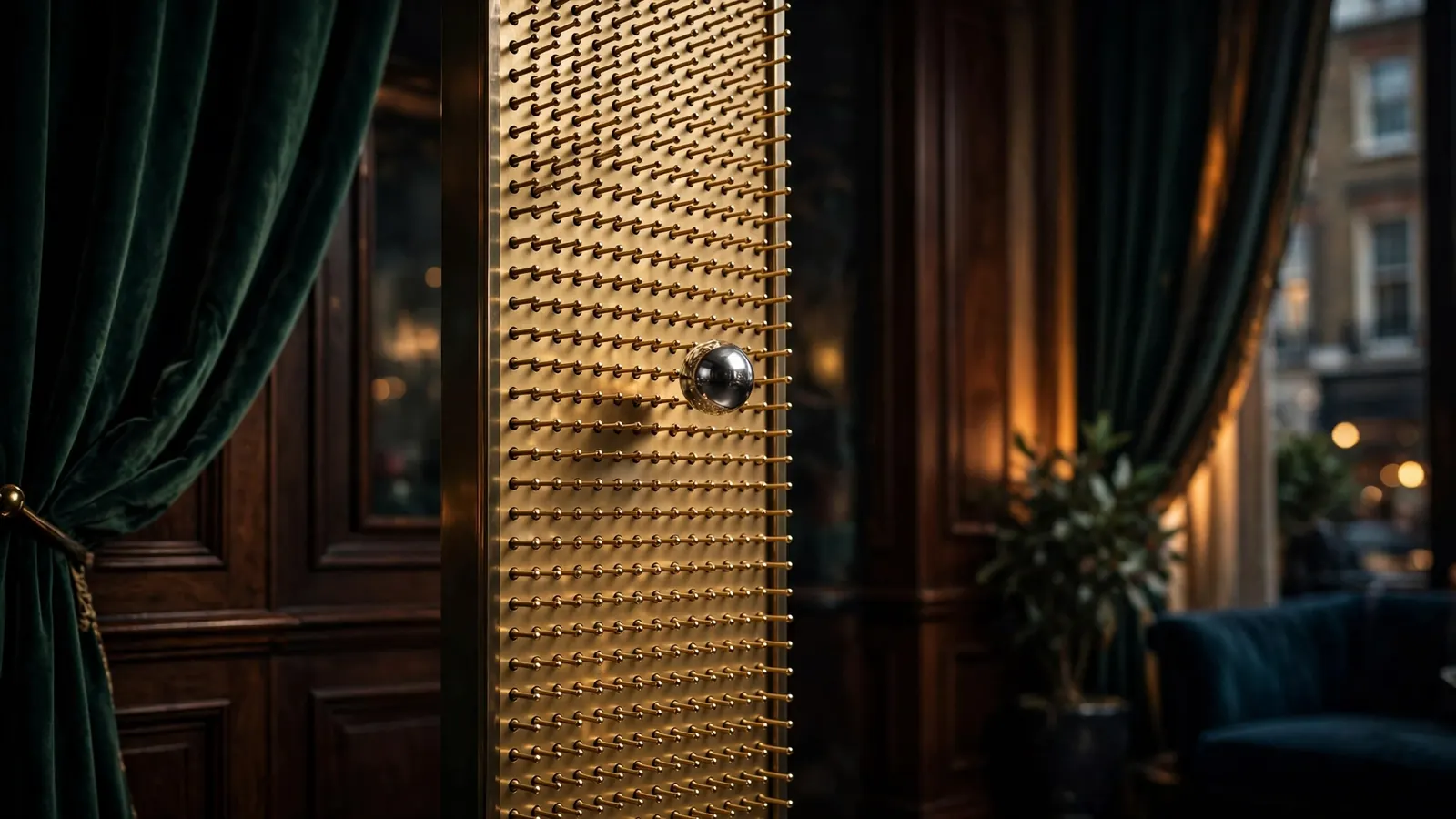
Table of Contents
- Plinko in the UK’s Online Casino Landscape
- The Casino-Game Mechanics Behind Plinko
- Playing for Real Money: The House Always Has the Long View
- Assessing Casinos That Offer Plinko
- The UK Rules Behind Casino Access in 2026
- Free Play and the Difference Between Practice and Stakes
- Bonuses, Bitcoin and the Terms That Matter
- What a Plinko Demo Can—and Cannot—Establish
- Crypto Payments on Casino Platforms
- Casino Apps and the Limits of What Can Be Verified
Plinko in the UK’s Online Casino Landscape
Plinko has a familiar visual language: a small object drops through a field of pegs and eventually settles in a lower space. That image travels easily between television games, arcade-style entertainment and casino software. In an online casino, however, the setting matters as much as the name. A page presenting a Plinko game sits within a wider market shaped by different kinds of operators, and those operators do not all stand within the same UK regulatory framework.
A specialist review has described the UK online casino scene in 2026 as two parallel worlds: the UK Gambling Commission (UKGC) market and offshore platforms outside the regulator’s system. That is a useful map, provided it is treated as a description rather than a complete account of every operator or game. The difference is not merely a matter of branding or website design. It concerns the regulatory environment in which an operator works.
The UKGC-regulated market is the local framework for online casinos serving British customers. Its rules define what legal online casino provision looks like in the UK. Offshore casinos, by contrast, operate outside the UKGC system; some accept UK players, but that does not place them inside the British regulatory framework. A site’s availability to someone in Britain and its status under UK regulation are separate questions. The distinction is easy to miss when both kinds of platform can appear in the same browser window.
Mr Play Casino Games: Slots & Table Providers in the UK
That is one reason searches for an online Plinko casino in the UK can lead into different territories. The phrase may describe a game a platform says it offers, but it does not identify the operator’s regulatory status. Nor does the word “casino” on a page settle the matter. A game title, a promotional label and a licence are different things, even when a site presents them together as one polished package.
The UK’s approach to gambling has a distinctly administrative character. Casino play is permitted online where the law allows it, but permission is not a free-floating quality that a platform acquires by welcoming British visitors. It is tied to the operator and the system under which it provides gambling. That structure can make the market feel less like a single high street transferred to a screen and more like two adjoining rooms with different rules. The doorway may be easy to find. The distinction still matters.
Plinko also unsettles familiar categories. Its falling object and peg board suggest a game of physical chance, while an online version belongs to a digital environment. The label may appear alongside casino games or be styled in ways that resemble a slot, but those presentation choices alone do not establish how a particular product works or how an operator classifies it. The surface can be playful; the surrounding platform remains a gambling service.
Aviator Casino Game in the UK: How It Works
This is where the phrase “best online Plinko casino” becomes less straightforward than it sounds. A broad market overview cannot turn an unfamiliar operator into a suitable one simply because its page carries the right game name. Nor does the presence of Plinko prove that the experience is the same across platforms. The UKGC and offshore distinction is a more meaningful starting point than a banner, a game thumbnail or a claim about popularity. Not glamorous. Important.
For British audiences, online casino play belongs to a regulated consumer environment, but the internet does not present that environment as a neat list of doors. Offshore platforms can be visible and accessible while remaining outside UKGC oversight. That coexistence explains why a page about an online casino with Plinko in the UK needs to distinguish between what is advertised and the framework behind the advertisement. The two are often placed side by side on a screen; they are not the same kind of information.
The phrase “Plinko slot” can add another layer of ambiguity. It may be used as casual shorthand for a casino-style digital game, or as a label chosen by a platform. It should not be treated as proof that every Plinko-branded game belongs to a particular formal category. A familiar name can travel farther than its precise meaning. Digital menus are excellent at making unlike things look like neighbours.
Attention: The availability of a site in Britain and its status under UKGC regulation are separate questions; a site’s presence in a browser window does not guarantee it is regulated.
The broader landscape, then, is not simply a catalogue of places to play Plinko online. It is a market in which game descriptions sit within contrasting operator environments. UKGC-regulated casinos belong to the British system; offshore platforms operate outside it, even when they are accessible to UK players. For anyone studying how Plinko appears in online casino culture, that distinction gives the subject its proper setting. The game is the visible part. The market behind it is the less visible one.
Top online casinos in the UK
- SlotoSportBonus: 500% up to £ 10 200+ 777 FS · Payout speed: 1-3 business days
- x3betBonus: Welcome Pack 100% Up to £1.000 + 200 Free Spins · Payout speed: 1-3 business days
- DieselwinBonus: Welcome Pack 250% up to £4000 + 200 FS · Payout speed: 1-3 business days
- WinBeastBonus: €5000 + 500 FS + €650 Freebet · Payout speed: 1-3 business days
- JetsetspinsBonus: 200% Bonus + 100 Free Spins + Free Royal Wheel · Payout speed: 1-3 business days
- SpinFormulaBonus: 550% Up To £15,000 + 550 FS · Payout speed: 1-3 business days
- NightLuckBonus: Welcome Pack + 805% Up To 6400€ + 280 FS · Payout speed: 1-3 business days
- ChanzeBonus: Slots Welcome Bonus #1 200% up to €500 · Payout speed: 1-3 business days
- ZombillionBonus: Welcome Pack 250% up to £4000 + 200 FS · Payout speed: 1-3 business days
The Casino-Game Mechanics Behind Plinko
A Plinko-style casino game sits within a wider family of games built around chance. The label may evoke a familiar visual: an object moving through a field of obstacles towards a result. But the image alone does not establish how a particular casino version works. What matters, in casino terms, is that a game offers possible outcomes and connects them to a wager. The entertainment is in watching uncertainty take shape; the underlying category is determined by how the game produces and presents that uncertainty.
Casino games can be understood as arrangements in which players stake cash or chips on outcomes, or on combinations of outcomes. That definition reaches beyond cards and roulette wheels. A result might depend on equipment, software or a mixture of visible presentation and hidden calculation. The essential point is not whether the game resembles a traditional casino table, but whether its outcome is uncertain and linked to what has been staked.
Random-number games make that uncertainty computational. A computer or other gaming equipment generates selected numbers, which determine the result. The display may give those numbers a vivid physical story: a ball seems to travel, a symbol appears, or a sequence unfolds. Yet the animation and the method of producing an outcome are not necessarily the same thing. A convincing visual can make randomness feel like a journey. It does not, by itself, explain the system behind the result.
Hi-Lo Casino UK: Online Play and Licensing
That distinction is useful when considering Plinko as a casino game rather than simply as a recognisable format. The game’s appearance may suggest a chain of small events, each nudging the final destination. A Plinko casino game may be presented in a way that feels more like a machine game than a traditional table game; the broad classification depends on how it is operated, not on the shape of its graphics.
Gambling machines are generally designed for individual play and do not need a casino employee to run each turn. Table games, by contrast, are commonly managed by a croupier or dealer, with players taking part against the casino rather than competing against one another. The difference is social as much as practical. A table makes the house’s presence visible in a person and a shared ritual; a machine places the interaction between one player and a system. The house is present either way, even when it has no chair at the table.
Unlike table games managed by a croupier, machine-style games like Plinko are designed for individual play without the need for a casino employee to run each turn.
This is why a Plinko-style game can feel unlike a familiar card or wheel game while still belonging to the same casino framework. The player encounters an outcome, but the route to it may be packaged as a self-contained machine experience. There is no need to assume that a dealer intervenes, or that players are competing with each other. Those features describe table games, not casino games as a whole.
Chance also does not mean that the casino and player face equal prospects over time. Casino games are generally structured to give the operator a predictable long-term advantage, while leaving room for a player to gain in the short term. That imbalance is not a contradiction. It is the arrangement: individual results can vary, while the overall design favours the house across continued play. A run of favourable outcomes may be memorable; it does not rewrite the game’s underlying balance.
Best RTP Casino Slots in the UK: RTP Explained
The distinction between a single result and the longer pattern is easy to overlook because casino games are experienced one moment at a time. A screen shows this turn, not the abstract relationship between many turns. Machine-style presentation can make the sequence feel personal, almost as if the game were responding to the player. But animation is not evidence of intention. Randomness may be dressed as drama. The drama is real; the implication of control is another matter.
Playing for Real Money: The House Always Has the Long View
Putting money on a casino game changes the character of the choice. A player is no longer simply watching a pattern unfold: cash or chips are committed to an uncertain result, and any return depends on how that result falls. In a Plinko-style game, the appeal is easy to understand. A small decision at the start leads towards an outcome that cannot be known in advance. The uncertainty is the point; it is also the reason a run of favourable results cannot promise another.
Fast Payout Online Casinos in the UK: What the Claim Means
Casino play is built around an unequal view of time. A player may finish a session ahead, sometimes substantially so; short-term gains are part of the possibility that makes a wager attractive. Across continued play, however, casino games are structured to give the operator a predictable advantage. The house does not need to win every round, or even to make every player’s session a losing one. Its advantage belongs to the longer account, where individual outcomes give way to the accumulation of play.
That distinction matters because human attention is drawn to the vivid instance: the ball landing well, the balance rising, the story later told about a lucky evening. The operator’s position is less dramatic. It rests on the expectation built into the game over time, not on a promise about what will happen to any one person. A winning spell may be real without proving that the game has become favourable. A losing spell may be painful without making a win due. Chance has no memory, and the house has no need of one.
No Winning System
No tactic can turn an uncertain outcome into a reliable income; a real-money game offers a possibility, not a wage.
So the question of how to win real money at Plinko has no dependable answer in the form of a method. There may be a win; no tactic can turn an uncertain outcome into a reliable income. A review of a Plinko game can describe its presentation or explain what is known about its rules, but the word “review” should not be mistaken for evidence that play will pay. Nor does calling a game a slot machine settle what it is: names used in marketing do not alter the financial relationship between a stake and a random result.
The same caution applies to withdrawals. A balance displayed after play is not, by itself, a guarantee that money can be withdrawn under every circumstance. The terms and the operator’s status matter, although those questions belong to the assessment of platforms rather than to the arithmetic of a wager. The central point remains plain: a real-money game offers a possibility, not a wage. It is designed as gambling, not as a dependable way to earn.
Fast payout online casinos in the UK: what counts?
In England, Scotland and Wales, an operator that takes real-money bets from customers must be licensed by the UK Gambling Commission, or UKGC. That requirement gives the legal threshold its proper shape: the issue is not simply whether a site accepts a stake or displays a game, but whether the operator is authorised to provide real-money gambling in the British market. The licence is a condition of lawful operation, not a prediction about a player’s results.
There is a social history tucked inside that rule. Gambling has long asked people to accept uncertainty in exchange for the possibility of gain; regulation reflects a public decision that this trade should not be left entirely to private promises. The house may retain the long view inside the game. The state, at least, sets a boundary around who may offer it for money.
No system for winning. A wager remains a wager.
Assessing Casinos That Offer Plinko
A casino’s location in a search result, its British-facing language and the rules under which it operates are different things. That distinction matters when comparing places that list Plinko. In the UK market, one group sits within the UK Gambling Commission’s regulatory system; another consists of offshore platforms outside it. Offshore casinos do accept UK players, but access does not put them inside the UKGC framework.
The difference is more than a line in a footer. A UKGC-regulated operator belongs to the system governing gambling businesses serving Britain. An offshore platform does not hold that same status simply because it welcomes British customers or presents its site in familiar terms. “For UK players” describes an audience, not a regulator.
That makes a comparison of UK Plinko casinos less like choosing between two versions of the same shop and more like comparing businesses under different arrangements. The game may be the feature that draws attention, but the operator’s regulatory position is what separates the categories. A list headed “best casinos to play Plinko” can obscure that distinction if it treats every site as interchangeable.
UKGC-Regulated Casinos
Operators that belong to the British regulatory system governing gambling businesses serving Britain.
Offshore Platforms
Casinos operating outside the UKGC framework, often licensed in jurisdictions such as Curaçao, Malta, or Gibraltar.
Offshore platforms may operate under licences issued in Curaçao, Malta or Gibraltar. Those places identify a different licensing context from the UKGC system; they do not turn an offshore operator into a UKGC-regulated casino. Nor does the presence of a foreign licence, by itself, explain what protections or procedures apply to a particular platform. The name of a jurisdiction is a starting point for understanding the operator’s status, not a substitute for it.
This is why labels such as “UK casino” can carry more atmosphere than information. A British flag, sterling prices or UK-focused promotions may signal an intended market, but they do not establish which regulatory system governs the business. The more useful comparison begins with the operator category, then keeps that category in view while considering the site itself. A polished interface does not change the underlying distinction. Neither does a game title.
There is also a social reason to resist a single league table. Ranking platforms as though they differed only in convenience or presentation quietly erases the divide between locally regulated services and sites operating beyond that framework. It makes the market look tidier than it is. “Best” is not a neutral word when the options being compared do not share the same regulatory setting.
For someone looking for casinos with Plinko in the UK, the sensible first distinction is therefore not which site appears most prominently or claims the broadest catalogue. It is whether the operator belongs to the UKGC-regulated market or operates offshore. Once that is clear, the label “Plinko casino” says only that the platform offers the game; it says nothing, on its own, about the operator’s regulatory category.
Online Casino Tournaments UK: Rules and Limits
The same caution applies to phrases such as “Plinko slots” or “free spins” in promotional material. They can describe how a site presents its offerings, but they do not settle the question of who regulates it. A casino comparison that begins and ends with the game’s name has missed the larger feature of the UK landscape: two kinds of platform can address the same audience while standing in different regulatory worlds.
Not the same ground.
The UK Rules Behind Casino Access in 2026
For a Plinko game to sit within the lawful online casino market for British residents, the important question is not the shape of the game or the country where a platform is based. It is whether the operator holds the required licence. The Gambling (Licensing and Advertising) Act 2014 established that any operator wishing to take bets from people in Britain must be licensed.
That rule makes the licence a condition of serving the market, not a mark that an operator can acquire merely by being based nearby or presenting itself as a casino. A platform may be reachable online from Britain; reachability alone does not make its offer lawful. The distinction is easy to lose on a screen, where one site can look much like another. The law draws it more plainly: taking bets from British residents requires a licence.
The arrangement reflects a wider choice about who should be answerable for gambling offered to people in Britain. Online services can cross borders with little ceremony; public rules cannot sensibly depend only on the operator’s address. The 2014 Act therefore ties the licensing obligation to the customers an operator seeks to serve. A remote casino cannot escape that obligation simply by locating its business elsewhere.
Under the Gambling (Licensing and Advertising) Act 2014, any operator wishing to take bets from people in Britain must be licensed.
For anyone considering an online casino with Plinko, this is the legal threshold behind access in the British market. The game itself does not create a separate route around the rule. Nor does a platform’s use of casino language settle the question. The relevant matter is the operator’s authority to take bets from British residents.
That is a quieter test than a game’s presentation, but a more consequential one. A familiar layout, an appealing welcome screen or a promise of access cannot substitute for the licence required by law. In this market, the border is drawn not at the point where a website loads, but at the point where an operator offers betting to people in Britain.
The rule also explains why “available” and “lawful” are not interchangeable descriptions. A service might be technically accessible while standing outside the licensing framework that applies to operators taking bets from British residents. The legal duty belongs to the operator; it is not a special condition attached to Plinko, and it does not change according to how a casino labels a particular game.
In 2026, then, the phrase “Plinko casino UK” describes more than a game placed on a website. It raises the question of whether the operator is entitled to serve the British market at all. The answer begins with the licensing requirement introduced by the 2014 Act. Everything else is secondary. That is the line.
Online Casino Without ID in the UK: What It Means
Free Play and the Difference Between Practice and Stakes
“Free play” describes a difference in what is at risk, not a different kind of promise. In casino gambling, a player stakes cash or chips on possible outcomes. A no-stakes version, where offered, removes that wager: it may let someone encounter a game’s presentation without placing money or chips on an outcome. The distinction is simple, though the word “free” can blur it.
That blur matters with a Plinko-style game. A screen may look much the same whether play involves a stake or not, but appearance does not determine what is being risked. The relevant question is whether cash or chips are committed to an outcome. If they are, it is gambling with stakes. If they are not, the activity is different in that central respect, even if the interface resembles a casino game.
For someone trying to understand how to play Plinko, free play can sound like a rehearsal: a way to become familiar with the screen and the sequence of choices before money is involved. That description should remain modest. A no-stakes mode, if provided, can show what its own presentation looks like; it does not establish that every casino offers one, or that a particular Plinko game is available to play without a stake. There is no universal practice room attached to the name.
Do
- Use free play to become familiar with the screen
- Check the specific terms of any “free” offer
Don’t
- Assume every casino offers a no-stakes mode
- Treat a demo session as a forecast of future payouts
Nor does the label settle what “free” means in every case. It may refer to play that asks for no cash or chips, while other offers can carry conditions of their own. A game presented without a direct stake is not automatically an entitlement to withdraw winnings, and the word alone says nothing about whether a balance can be cashed out. The terms attached to an offer, rather than its cheerful label, define what it does.
This is why Plinko free play and real-stakes play should not be treated as interchangeable versions of the same experience. A no-stakes session may be useful for getting acquainted with a display, but it does not put money at risk; a session involving cash or chips does. The difference is not cosmetic. It changes the nature of the activity.
The appeal of practice is understandable. Casino games have long made uncertainty feel orderly by giving it a setting, a sequence and a visible result. Removing the stake can make that setting easier to explore, but it cannot turn a demonstration into a forecast of future outcomes or a promise of a payout. “Free” describes the absence of a stake, where that is genuinely the case. It does not mean consequence-free in every broader sense, nor does it tell how a particular platform handles play.
For UK players looking for a Plinko game without wagering, the useful distinction is therefore narrower than the phrase “play for free” suggests: no cash or chips committed means no stake in that session. Anything beyond that depends on the specific offer and its terms. A label is not the whole arrangement.
Monopoly Live Casino UK: Licensing, Rules and Play
Bonuses, Bitcoin and the Terms That Matter
A Plinko promotion can look simple in a banner and become considerably less simple in its terms. The headline amount is only one part of the offer: eligibility, the qualifying deposit, which games count towards wagering requirements and the deadline for using bonus funds can all affect what may eventually be withdrawn. The terms should make those conditions clear. A bonus is not cash merely because it appears in an account balance.
Since 19 January 2026, a gambling incentive cannot require wagering of more than 10 times the bonus funds. That cap gives a firm boundary to one particularly consequential condition. A £20 bonus subject to 10x wagering, for instance, requires £200 in total stakes before the bonus can be cashed out. The arithmetic is straightforward; the games and transactions that count towards it still need to be checked in the offer’s terms.
Promotions also cannot bundle different types of gambling into a single incentive. A casino reward cannot require bets on another gambling product to unlock it. This matters when an offer is presented as one package: the route to qualifying for a reward must not depend on moving between product categories. Plain terms are not decoration. They are the substance of the offer.
Welcome packages may be split into stages, each with its own qualifying deposit. A specialist bonus review describes minimum deposits for these stages as often falling in the modest £10 to £20 range; that is an observation about offers it reviewed, not a universal tariff. The precise threshold belongs to the individual promotion. Where free spins or other extras appear alongside a deposit bonus, their conditions may be separate, so the headline should not be treated as a complete account.
Bonus Wagering Example
A £20 bonus subject to 10x wagering requires £200 in total stakes before the bonus funds can be cashed out.
A no-deposit bonus, by definition, can be received without spending money. That description says nothing by itself about whether such a promotion exists for a Plinko game, or what restrictions would attach to it. Eligibility and conversion conditions remain decisive.
Bitcoin belongs to a different part of the arrangement. A specialist platform review reports that some alternative platforms may accept Bitcoin, Ethereum or Litecoin alongside conventional cards and e-wallets. Payment choice does not alter bonus rules: a cryptocurrency deposit does not make wagering requirements disappear, nor does it turn an incentive into withdrawable funds. Availability of a payment method also says nothing, on its own, about an operator’s standing in the UK market.
For UK-licensed gambling, credit cards cannot be used to fund play. The distinction between a permitted payment route and a promotion is therefore practical as well as conceptual: one concerns how money enters an account, the other what conditions govern a reward. Separate questions, often crowded into the same banner.
What a Plinko Demo Can—and Cannot—Establish
A demonstration can make a game’s presentation easier to understand. It may show how a Plinko-style game is displayed and what information appears on screen, but those visible details are not the same as evidence about how outcomes are produced. A picture of a game is not an inspection of its machinery.
Deal or No Deal Casino UK: Format and Offers
Random-number games rely on selected numbers generated by a computer or other gaming equipment. That principle matters even when play is presented as a demo: the display may illustrate the experience, but it cannot, by itself, establish the operation of the underlying system. Nor can a handful of results show what a player would encounter over time. Randomness is precisely the refusal to make one observed run a reliable forecast of the next.
This places a boundary around what a Plinko demo can reasonably tell anyone. It can offer a view of the interface, if one is available, and help make the format less abstract. It cannot prove that outcomes are fair, independently tested or identical across every version of a game. Those claims require evidence beyond the demonstration itself. A convincing animation is still an animation.
The distinction is easy to miss because digital games make process and presentation appear seamless. A result arrives on a screen, and the screen gives it a tidy visual form. The generator, however, is not made transparent merely because its output is visible. The history of gambling has always involved devices that turn uncertain outcomes into spectacles; a digital display changes the scenery, not the limits of what observation can establish.
A Plinko slot demo, where offered, should therefore be understood as a sample of presentation rather than a certificate about the system behind it. The same caution applies to any demonstration of a random-number game. It can show what is shown. It cannot make a future result predictable, or settle questions that its display does not answer.
Demo Limits
A demonstration shows the interface and presentation but cannot prove the fairness or operation of the underlying random-number system.
Crypto Payments on Casino Platforms
A Plinko game does not determine how a casino accepts deposits. Payment methods belong to the platform, and specialist casino reviews describe some alternative platforms as accepting Bitcoin, Ethereum and Litecoin alongside conventional cards and e-wallets. That is a report about the wider platform category, not a claim that every casino offering Plinko supports digital currencies.
The distinction matters in Britain. A cryptocurrency option does not alter the rules governing an operator that takes bets from British residents: remote gambling operators selling into the British market must hold a UKGC licence. Offshore platforms operate outside that system, and a payment method cannot turn them into licensed operators. Nor does the presence of familiar card or e-wallet logos establish that a site is authorised to serve the British market.
Crypto payments also differ from ordinary card transactions in how value is represented and transferred. Bitcoin, Ethereum and Litecoin are separate digital assets, not interchangeable labels for one payment service. Whether a platform accepts any of them, and how it handles a deposit or withdrawal, depends on that operator’s arrangements. The same caution applies to conventional methods: a list of possible payment types is not proof that each one is available at a particular casino.
For UK-licensed gambling, credit cards cannot be used to fund play, including through a money service business; wallets funded by credit cards are also barred for gambling. That restriction concerns the route money takes, not merely the name attached to a checkout button. Alternative platforms may list cards, but that does not make every card payment permissible on a UK-licensed site.
The payment choice, then, says little about the game itself and nothing conclusive about the operator’s status. It identifies a possible route for moving funds, subject to the platform and the rules that apply. A coin is not a licence.
Online Bingo in the UK: Formats and How Play Works
Casino Apps and the Limits of What Can Be Verified
A search for a Plinko casino app in the UK can mean two different things: a casino website that works on a phone, or a dedicated application that can be downloaded and installed. Those are not interchangeable. A mobile-friendly website may open in a phone’s browser without being a separate app; an app, by contrast, has to exist as a specific product for a particular operator and platform.
Casino games are available through online casinos where permitted by law. That establishes the general possibility of browser-based play, not the existence of a dedicated Plinko app or a download bearing that name. Nor does a page describing a game establish that it can be installed on a device. Access format is a small detail until it becomes the detail that determines whether the software is genuine.
The distinction matters because “download” can suggest more certainty than a web link provides. A page may direct visitors to a mobile site, an app store, or a file offered elsewhere; each route has different implications. The mere presence of an installation button does not confirm what it installs, who supplied it, or whether the game is included. A familiar icon is not a guarantee. It is only an icon.
For a UK audience, the relevant question is not simply whether a game can be opened on a phone. It is whether the service itself is available in the appropriate legal setting and whether the claimed app is actually associated with that service. A casino page, a mobile browser version and a dedicated application should therefore be treated as separate things, rather than three names for one convenient little rectangle.
So the most careful description is also the least dramatic: online casino games can be accessed where permitted, but a particular Plinko app or download cannot be assumed from that fact alone. The format needs its own confirmation.
Created by the ”mr Play” editorial team.