Lightning Roulette in the UK Live Casino: What to Know
 Available in GB
The game combines a physical roulette wheel with randomly selected numbers and lightning multipliers in a live online setting.

Table of Contents
- Lightning Roulette in the Live Casino: The Table Behind the Search
- Which Casinos Offer Lightning Roulette—and What to Check First
- An Online Casino With Lightning Roulette, Under British Rules
- First-Person Lightning Roulette: A Different View of the Table
- Choosing a Lightning Roulette Casino Without a Fake Top Ten
- The Game, the Stake, and the Limits That Do Not Apply
- Trying Lightning Roulette in Demo Mode
- What “Best” Means When No Casino List Can Be Verified
- The Live Dealer and the Human Shape of the Game
- Playing Lightning Roulette Online in Britain
Lightning Roulette in the Live Casino: The Table Behind the Search
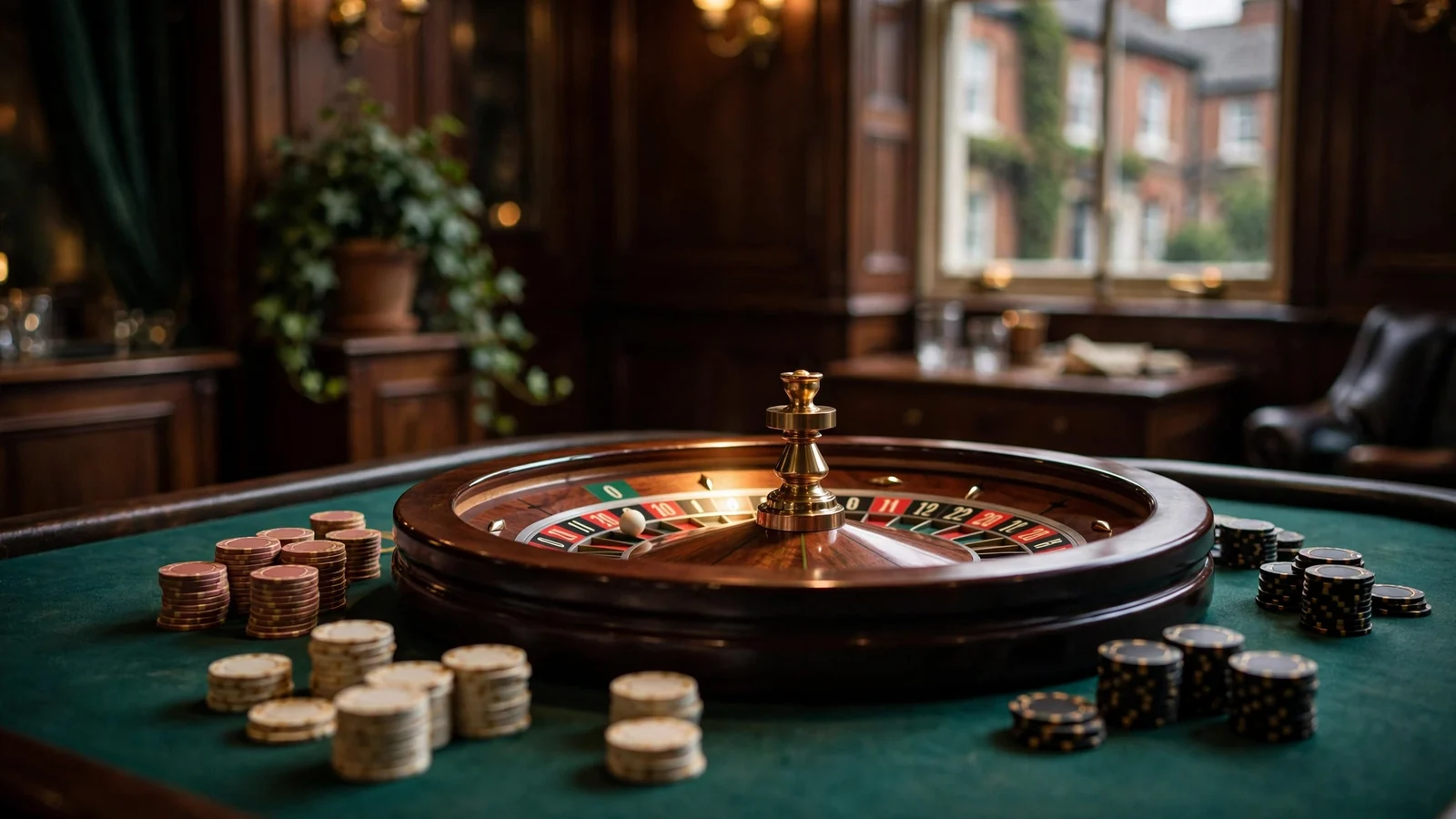
Lightning Roulette belongs to a familiar family of casino games, but it gives the roulette table a conspicuously modern frame. The wheel remains the centre of the game; around it, a digital layer introduces randomly chosen numbers with lightning multipliers. The result is still recognisable as roulette, though its presentation makes each round feel less like a quiet exercise in watching a ball settle and more like a small event staged around the wheel.
That combination helps explain the game’s place in the live casino. A live table brings a physical setting into an online format: the wheel, the layout and the unfolding round are shown as a continuous game rather than reduced to the symbols and animations of a slot. Lightning Roulette adds effects to that scene without turning it into a different category of entertainment. Its appeal rests on the tension between an old table-game ritual and an emphatically contemporary presentation.
Live Dream Catcher Casino UK: What to Check
The wider live-casino menu has grown around precisely that mixture of continuity and change. Blackjack, roulette and card games carry customs that existed long before anyone watched a table through a screen. Online presentation does not erase those customs; it rearranges how they are encountered. A player may move between tables from the same device, and the room itself becomes less important than the particular game and its style of presentation. The old casino floor is not reproduced so much as edited.
There is a history to that change in Britain. Grosvenor first introduced its live-casino games in 2013, with a selection that included Blackjack, Texas Hold’em and Roulette alongside other casino games. The detail is useful not as a claim that one operator invented the live format, but as a marker of how the online casino began to borrow the look and language of the physical room. Roulette was already part of that vocabulary. Lightning Roulette belongs to a later phase, in which familiar tables are made more theatrical for a screen-based audience.
The word “live” can suggest that everything about the experience is spontaneous. In practice, it describes a format: a real table is presented through a stream, while the game’s interface supplies information and visual cues. In Lightning Roulette, those cues are unusually prominent because the lightning feature is built into the identity of the game. The screen asks for attention in more than one place. There is the wheel, and there is the layer of effects that gives selected outcomes a heightened role.
Online Bingo in the UK: Formats and How Play Works
That does not make every round predictable, nor does the spectacle alter the basic uncertainty at the heart of roulette. The presentation can make a result feel charged, but it cannot turn chance into a pattern. This is the difference between atmosphere and information, a distinction that matters wherever a game is designed to be watched as well as played.
For someone looking at a Lightning Roulette live casino in the UK, the useful starting point is therefore the game’s character, not a promise about what it will deliver. It is a roulette table with a bold visual feature, set within the broader live-casino convention of showing a game as it unfolds. That context separates it from both a conventional roulette interface and a slot dressed in casino imagery. The wheel still does the talking. The lightning makes sure it is heard.
Top online casinos in the UK
- SlotoSportBonus: 500% up to £ 10 200+ 777 FS · Payout speed: 1-3 business days
- x3betBonus: Welcome Pack 100% Up to £1.000 + 200 Free Spins · Payout speed: 1-3 business days
- DieselwinBonus: Welcome Pack 250% up to £4000 + 200 FS · Payout speed: 1-3 business days
- WinBeastBonus: €5000 + 500 FS + €650 Freebet · Payout speed: 1-3 business days
- JetsetspinsBonus: 200% Bonus + 100 Free Spins + Free Royal Wheel · Payout speed: 1-3 business days
- SpinFormulaBonus: 550% Up To £15,000 + 550 FS · Payout speed: 1-3 business days
- NightLuckBonus: Welcome Pack + 805% Up To 6400€ + 280 FS · Payout speed: 1-3 business days
- ChanzeBonus: Slots Welcome Bonus #1 200% up to €500 · Payout speed: 1-3 business days
- ZombillionBonus: Welcome Pack 250% up to £4000 + 200 FS · Payout speed: 1-3 business days
Which Casinos Offer Lightning Roulette—and What to Check First
A casino can display Lightning Roulette in its live-game lobby and still be a poor place to open an account. Availability is the first question, not the answer. Games can be added, removed or presented differently across sites, so the sensible check is the operator’s own lobby: does it show the live version, and can its rules and table information be opened before play begins? A promotional image is not the same thing as a working game.
The more consequential check concerns the business behind the lobby. For customers in Great Britain, the Gambling Commission requires remote operators to hold the relevant licence. Its oversight applies to remote gambling offered to people in Great Britain even when the operator’s key equipment is located elsewhere. A polished website, familiar payment branding or a British-sounding name does not establish that the operator is authorised.
Licence Verification
Verify the operator’s licence number on the Gambling Commission’s public register before making any deposit. A polished website or familiar branding does not establish that an operator is authorised.
The Commission’s public register is the place to check. Search for the business named in the site’s terms, not only the casino brand on the home page. Then compare the register entry with the operator details and domain shown by the casino. A licence belonging to a different business is not a useful substitute; neither is a logo displayed without a matching entry. The licence number should be verified on the register before any deposit is made. If the ownership trail is hard to follow, that is information in itself.
This distinction matters in searches for Lightning Roulette casinos in the UK, because a game title can travel more easily than a regulator’s authority. The same live product may appear on sites with very different ownership and oversight. The game’s presence cannot certify the operator, and the operator’s claims cannot certify themselves. Paperwork remains less theatrical than the table, but more important.
Once the operator’s identity and licence have been checked, the account process offers further evidence of how the business treats its obligations. An operator must verify a customer’s age before allowing money to be deposited. New customers must be prompted to set a financial limit before their first deposit, with account-level controls available afterwards. These are not decorative settings: they provide a way to put a boundary around gambling before the pace of a live table starts to shape decisions.
Online Casino Without ID in the UK: What It Means
Payment options deserve the same scrutiny. UK-licensed casinos cannot accept credit cards for gambling, including credit-card funding routed through a money service business. A wallet that permits credit-card funds to be used for gambling cannot be used to sidestep that restriction. If a cashier presents such a route as an ordinary way to fund play, the problem is not solved by the convenience of the interface.
The less visible parts of the account matter too. UK Gambling Commission licensees must provide an internal complaints process and access to an approved Alternative Dispute Resolution service. They must also offer responsible-gambling tools, including self-exclusion. A site should make these routes findable before they are needed, rather than leaving them buried in a maze of help pages. Operators are also required to contribute to the Research, Education and Treatment levy; customers need not investigate its accounting, but the obligation is part of the system in which a licensed operator works.
There is a difference between checking whether online casinos with Lightning Roulette are suitable and trying to identify a universal “best” one. The first can be approached through details that can be tested: the game is actually listed, the operating business is identifiable, the licence entry matches, account safeguards are accessible, and the payment and complaints arrangements are clear. The second depends on preferences and claims that change. A confident ranking cannot replace a register entry.
Operator Verification
- Confirm Lightning Roulette is listed in the live lobby
- Identify the legal business name in the terms
- Verify the licence entry on the public register
- Check for accessible account safeguards
- Clarify payment and complaints arrangements
These checks apply whether a casino describes itself as a specialist live venue or offers Lightning Roulette among a broad collection of games. They also apply when a site is reached through an advert, an affiliate page or a recommendation from someone else. Each route can point towards a different operator, and the name displayed in an advert may not be the legal business shown in the terms.
The order is plain: confirm the game, identify the operator, verify its licence, then inspect the account conditions. Only after that does the table become the main subject. And even then, the basic boundary remains: gamble only what can be afforded to lose.
An Online Casino With Lightning Roulette, Under British Rules
A search for an online casino with Lightning Roulette can make the game appear to be the main question. In Britain, the more fundamental question is who is permitted to offer remote gambling at all. The live table may be presented as entertainment, complete with a dealer and a polished interface, but the service behind it belongs to a regulated commercial activity. The rules attach to the operator, not to the theatrical surface of the game.
The UK Gambling Commission regulates gambling activity across the United Kingdom, including online casinos. In Great Britain, it is the sole regulator for commercial gambling. That distinction matters: “UK” is often used casually as if every part of the country shared one legal arrangement, but the Gambling Act 2005 applies in England, Wales and Scotland, not Northern Ireland. A description of the British remote-gambling framework should therefore be precise about its territory rather than treating the map as a footnote.
For people in England, Scotland and Wales, online gambling is legal when it is offered by an operator holding the appropriate UK Gambling Commission licence. A remote casino cannot avoid that requirement by keeping its offices, servers or other key equipment abroad. The relevant point is that it offers gambling to consumers in Great Britain. The Commission’s reach follows the market being served, not simply the physical location of the company or the machinery supporting its website.
That principle shapes what an online Lightning Roulette casino is, legally speaking. The game itself does not create a separate route around the rules. Whether a site presents roulette through a live studio, a conventional digital table or another interface, the business offering real-money gambling to British customers needs the relevant authorisation. A foreign address is not a substitute for a British licence where the service is directed at the Great Britain market.
The licensing system also distinguishes between the organisation providing the service and certain people working within the regulated operation. The Commission grants operating licences to businesses, while individuals who carry out regulated roles may need personal licences. These are different forms of permission with different subjects: one authorises a company’s gambling activity; the other concerns a person’s fitness to perform particular responsibilities. Treating “the casino is licensed” as if it described every part of the arrangement flattens that distinction.
Licensing Distinction
The Gambling Commission grants operating licences to businesses, while individuals in regulated roles may require separate personal licences.
This structure reflects a broader idea about commercial gambling: responsibility is not confined to the person whose name appears on a website. A business can organise the service, while individuals take decisions or perform functions within it. The separate licence categories make those roles visible to the regulator. It is an unshowy division of accountability, and rather more consequential than the colour of a roulette interface.
The same framework applies whether the product is described as a Lightning Roulette casino online or as a wider casino platform containing many games. A product name is not a legal status. The presence of a familiar title on a lobby page does not, by itself, establish that the operator is authorised to provide gambling in Great Britain. In regulatory terms, the relevant relationship is between the licensed business and the customer-facing activity.
Nor does the word “online” make the service a lesser kind of gambling. The Gambling Commission’s remit includes remote gambling offered to Great Britain consumers, and the operator must hold the relevant licence even when the equipment that enables play is elsewhere. The internet can make borders feel porous; the legal obligation is designed not to disappear through that feeling.
Northern Ireland requires care in any wider statement about British rules. The Gambling Act 2005 does not extend there, so the framework described here concerns Great Britain rather than a single undifferentiated territory. That does not make the Commission’s role in Great Britain uncertain; it makes the boundary worth naming. Legal geography is less convenient than a country label. It is also more accurate.
Live Baccarat Online Casinos in the UK: What to Know
For a player considering an online casino with Lightning Roulette in Great Britain, the regulatory framework is therefore not a decorative seal attached to the game. It is the system that determines which businesses may offer commercial remote gambling and which individuals may perform regulated functions within them. The wheel may be the visible centre of the experience. The licence belongs to the machinery around it.
First-Person Lightning Roulette: A Different View of the Table
A first-person view changes the apparent position from which Lightning Roulette is watched. Instead of seeing the table as a scene laid out for an audience, the player is given a viewpoint closer to the place of play: the wheel and betting area feel arranged in front of the screen, rather than viewed from a distance. The distinction is one of perspective, not a different game.
That shift can make the interface feel more immediate. The wheel becomes the visual centre; the betting layout sits within the same imagined space. In a conventional presentation, the screen can resemble a broadcast window, with the table framed as something happening elsewhere. A first-person camera narrows that distance. It suggests participation, even though the player remains at home and the display remains an interface.
The effect depends on how the view is designed. Camera position, table framing and the amount of the layout visible all influence whether the scene feels close or merely cropped. A tighter view may draw attention to the wheel, while a wider composition can preserve more of the table context. Neither is inherently better. One emphasises the central action; the other makes the relationship between wheel and betting area easier to read.
Visual Impact of First-Person View
Camera position and table framing influence whether the scene feels immediate or merely cropped. A tighter view emphasises the wheel’s central action, while a wider composition preserves more of the table context.
This is particularly relevant in a game whose identity is tied to a live roulette table. Its visual language is not simply a wheel rendered on a screen: the table setting gives the action a physical shape. First-person presentation asks the player to imagine occupying that setting. It is a small act of theatre, performed by camera and interface rather than by any change to the rules.
The viewpoint also affects how information is noticed. A layout that seems clear from a distant camera may feel crowded when brought closer, while details that were easy to overlook can become prominent. The screen must balance the live image with the controls and the betting surface. If those elements compete for attention, the sense of immersion can give way to the ordinary work of finding one’s place on a digital table.
That is the quiet compromise of the format. First-person framing can make the table feel nearer, but it cannot turn a screen into a room or remove the need to understand what is displayed. The image remains mediated: selected, composed and organised for play. Presence, carefully staged.
The view is also not a promise that every version of the game will look identical. Interfaces can differ across screens and implementations, so the practical question is whether the camera angle leaves the table legible and the controls accessible. A perspective that works on a large display may feel cramped on a smaller one. The label describes an approach to viewing, not a guarantee of a particular layout.
For some, that closeness will make the experience more absorbing; for others, a broader view may feel calmer and easier to follow. The important difference is not a new way to wager but a change in how the table is presented. First-person Lightning Roulette places the visual emphasis nearer the player’s imagined position, while the underlying game remains roulette. Any play should be limited to money that can be afforded to lose.
Choosing a Lightning Roulette Casino Without a Fake Top Ten
A casino carrying Lightning Roulette is not automatically the right place to play it. The game may be familiar while the surrounding experience differs: how clearly the table is presented, how easy it is to find its rules, and whether the account controls are understandable before any money is involved. A ranking cannot settle those questions for every player. It can only conceal the choices behind a single, confident label.
The first distinction is between a game being advertised and a casino being suitable. A prominent tile says little about the clarity of the game information or the quality of the operator’s account arrangements. Before comparing design or convenience, the essential threshold is regulatory. The Gambling Commission requires remote operators serving consumers in Great Britain to hold the relevant licence. The licence number should be checked against the Commission’s public register before a deposit; a familiar brand name, polished site or search result is not a substitute for that check.
Do
- Verify the licence on the public register
- Check for clear game information
- Ensure limits are visible and manageable
Don’t
- Rely on a familiar brand name
- Trust a polished website as proof of authority
- Use an attractive welcome message as a quality metric
Beyond that threshold, comparison becomes more personal and less theatrical. One casino may make the live table easy to locate; another may surround it with promotions and categories that obscure the route back to the game. The useful question is not which site looks most generous, but whether its layout makes ordinary decisions legible: where game information sits, how account settings are reached, and whether the terms attached to offers can be read without leaving the player to infer their meaning.
The same discipline applies to payment and account features. A casino should explain its available methods and restrictions plainly, rather than letting an attractive welcome message do all the talking. Limits should be visible and manageable within the account. These details are not decoration around the roulette table. They shape the conditions under which play takes place, and deserve attention before the table’s graphics do.
A comparison can also consider whether Lightning Roulette is presented as one option among casino games or pushed as the centre of the site’s attention. Neither arrangement proves that an operator is good or bad. It does, however, reveal something about the environment being offered. A restrained interface may suit someone who wants to reach a particular table; a busier one may make browsing part of the appeal. Preference is not evidence of safety.
Online Casino Tournaments UK: Rules and Limits
Claims of a “best” Lightning Roulette casino often flatten these differences into a verdict that cannot travel well from one person to another. A more dependable choice is one whose licensing status can be verified and whose terms, controls and presentation remain clear under close reading. No medal required.
The game itself cannot make an operator trustworthy. Nor can a familiar interface. Any decision to play should remain bounded by money that can be lost without affecting essentials; gambling is not a way to solve financial pressure. A casino comparison is useful only when it leaves room for that plain fact.
The Game, the Stake, and the Limits That Do Not Apply
Lightning Roulette belongs to the roulette family of casino table games, even when its presentation borrows the bright punctuation of a game show. Its central wager remains a roulette wager: a player selects where a ball might land, while the game’s lightning feature adds another layer to the result. The distinction matters because rules written for one kind of gambling do not automatically travel to another.
American Roulette Online in the UK: Licensing and Play
A specialist review describes Great Britain’s online slot restrictions as applying a maximum stake of £5 per game cycle to adults aged 25 and over, and £2 to those aged 18 to 24. The figures concern online slots, not every game delivered through a casino website. A screen is not a legal category. The same device can display a slot, roulette, blackjack or a live table, but the regulatory treatment follows the game, not the glass in front of it.
That difference can be easy to miss when casinos present a single lobby for many forms of play. Slots are built around successive game cycles; roulette is organised around a table wager and a spin. A specialist review states that the slot stake limits do not extend to roulette or blackjack. That is a distinction about the scope of those limits, not a promise that every roulette wager is sensible or affordable.
Attention: Slot stake limits (£5 for 25+ and £2 for 18-24) do not extend to roulette or blackjack.
Lightning Roulette’s special feature does not turn it into a slot. It remains roulette, with its own structure of wagers and outcomes. The word “Lightning” describes the added game feature, not a change of category. For anyone considering whether to play a Lightning Roulette casino game in the UK, that classification is more useful than assuming that all online casino games share the same stake rules.
A higher permitted stake is not a recommendation to use it. Roulette outcomes remain uncertain, and the presence of a live table or an animated feature does nothing to soften that uncertainty. The sensible boundary is personal rather than theatrical: gamble only what can be afforded to lose. Limits on one category of game should not be mistaken for protection from losses in another.
A casino lobby groups games for convenience; regulation separates them by type. The difference is quiet, but consequential. Slot limits belong to slots. Roulette is another matter.
Trying Lightning Roulette in Demo Mode
A demo version of Lightning Roulette, when one is offered, separates the table’s interface from the financial consequence of a real-money session. It can show how the screen is arranged, where selections appear and how a round moves from betting to its result. That makes it useful for orientation, not a rehearsal that can guarantee success later.
The distinction matters. A simulated balance is not money that can be withdrawn, and a demo result does not establish what a real session will feel like. Without a cash stake at risk, the pressure surrounding a decision is absent. The display may resemble the live game, but resemblance is not equivalence.
For someone wanting to play Lightning Roulette in demo mode, the first practical question is whether the game itself offers that option on the platform being viewed. Availability can differ. A casino may provide a demo, require an account, or send visitors directly to a real-money version. Those are separate arrangements, and a demo button should not be treated as evidence that the same access conditions apply everywhere in the UK.
Demo Mode
Use the demo version to test if controls are legible on your device and to observe the round sequence without risking a real wager.
A trial can still answer small, concrete questions. Are the controls legible on a phone? Is it clear where a selection has been placed? Does the sequence of a round make sense before the next one begins? These are interface questions, not clues to future outcomes. A smooth demonstration cannot turn chance into a pattern.
It may also help distinguish interest in the game from interest in its presentation. The moving table, animated effects and changing screen can be part of the appeal; a static description cannot reproduce them. Yet visual excitement is carefully designed to hold attention. The demo lets that design be observed without a real wager, which is a modest but useful difference.
A Lightning Roulette demo in the UK is therefore best understood as a look around, not a recommendation to open an account or deposit. If the trial is unavailable, there is no need to treat that absence as a problem to solve through another site. And if real-money gambling follows, only money affordable to lose should be at stake. The boundary is plain.
What “Best” Means When No Casino List Can Be Verified
A claim to be the best Lightning Roulette casino sounds like a verdict, but it can conceal several different standards. One player may care most about a clear picture of the wheel; another may value a calm interface or the ability to find the game without navigating a maze of promotions. Those preferences are real, but they do not make a universal ranking.
A useful comparison begins by separating what can be established from what is merely asserted. A casino’s promotional language is not evidence that its table is superior, and a polished review is not automatically an independent one. Rankings can also become stale as game menus, terms and ownership change. A label such as “best in the UK” needs a basis that is both visible and relevant to the present choice, not just a confident heading.
European Roulette at UK Online Casinos: Rules and Safety
For British players, one firm condition sits beneath the softer judgments: remote operators serving Great Britain must hold the relevant Gambling Commission licence. That does not decide which experience will suit a particular person, but it distinguishes a legitimate starting point from a marketing claim. The word “best” cannot compensate for that distinction.
Beyond it, comparison is more useful when framed around observable details than medals. Is Lightning Roulette actually available in the casino’s live-game lobby? Is the table information legible before play begins? Can the rules and terms be read without being buried under sales language? These are modest questions, but modest questions often survive contact with reality better than grand rankings.
The date in a title matters, too. “Best” in 2026 should not be treated as a permanent property of a casino. A page may still be online after its comparison has aged; a current-looking badge does not establish that the underlying review was refreshed. The sensible standard is transparent, recent evidence, not a superlative repeated until it looks like a fact.
There is also a human limit to any comparison: a table that feels comfortable to one player may feel busy or distracting to another. No ranking can settle that taste on behalf of everyone. The strongest recommendation is therefore not a crown, but a clear account of what was checked and why it matters.
Lightning Roulette remains gambling, however attractive the presentation or persuasive the ranking. Only wager what can be afforded to lose. A careful choice is not the same thing as a promise of a good outcome.
The Live Dealer and the Human Shape of the Game
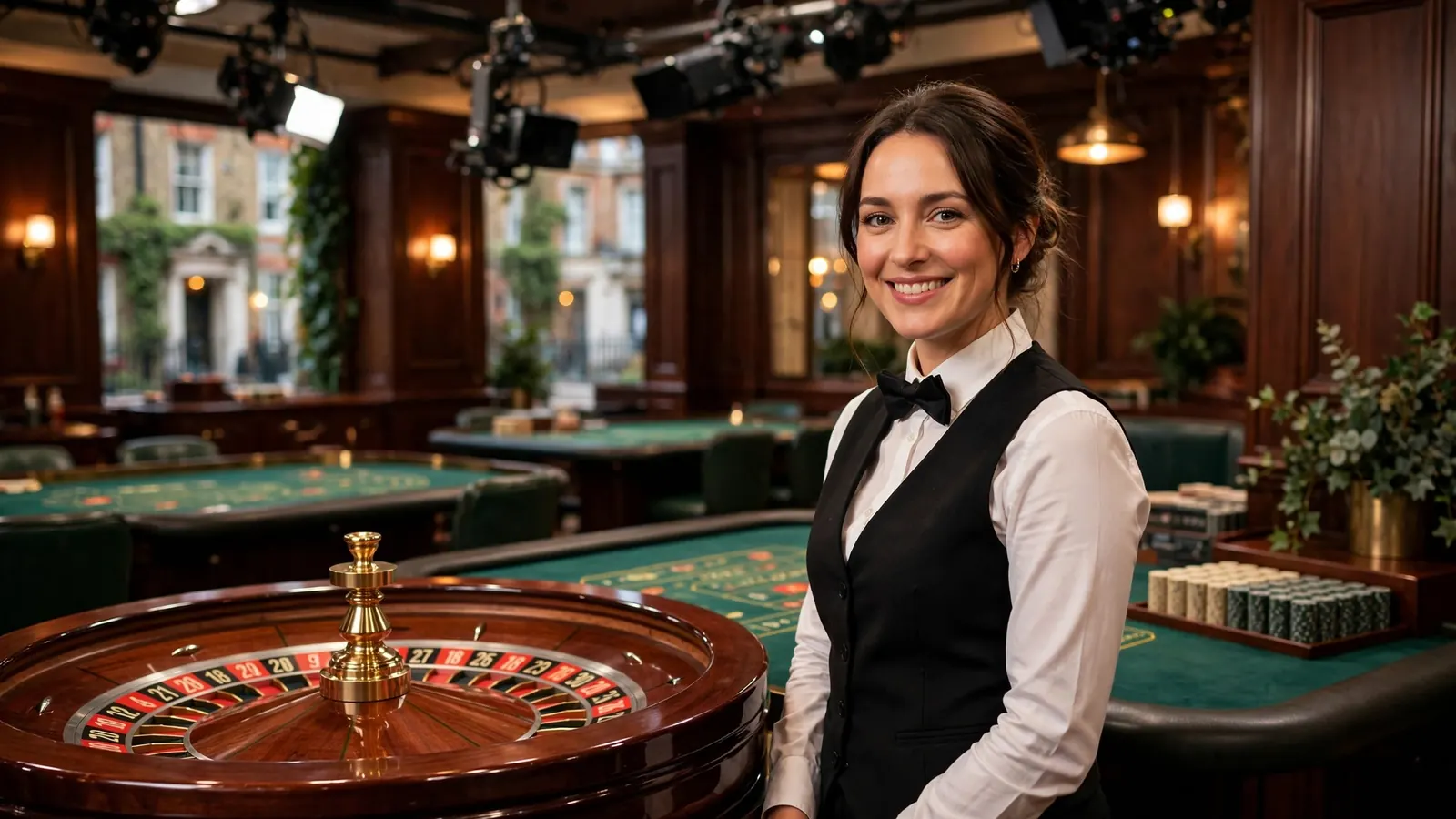
A live dealer changes the social meaning of roulette without changing its basic uncertainty. The wheel remains the centre of attention, but the game is presented through a person: someone who conducts the round, handles the table and gives its progress a human pace. In an online casino, that presence distinguishes a live table from a digital animation. It is not a guarantee of intimacy. It is a visible human being at work.
The Live Dealer
A live dealer provides a recognisable social frame and human pace, but does not alter the fundamental uncertainty of the game.
That matters because casino games have always been more than their rules. A physical table gathers strangers around a shared spectacle: a pause, a glance, the small ceremony of a result being announced. Online, the room is absent, yet the dealer supplies a point of continuity. Attention can settle on the table rather than on a sequence of buttons. The format borrows some of the theatre of the casino floor, while leaving each player alone with a screen.
Lightning Roulette’s live dealer is therefore not merely decoration around a wheel. The dealer gives the game a recognisable social frame, even when the interaction is limited to watching proceedings. The appeal may lie in that sense of an event unfolding in real time, rather than in a claim that the game becomes more predictable or more personal. Chance does not become warmer because it has a face.
The development of live casino games in Britain has its own history. Grosvenor introduced a live casino offering in 2013, bringing together card games and casino tables that included Blackjack, Texas Hold’em and Roulette. That early range placed the live format within a familiar tradition: established games, presented through a human-led table rather than recreated solely by software. The technology changed the room’s location. The social idea travelled with it.
For a British audience, a live-dealer casino table can make an online game feel less abstract, but it remains gambling, not company. The distinction is worth keeping. A dealer’s presence may lend a round rhythm and ceremony; it cannot alter the uncertainty that defines the wager. Only wager what can be afforded to lose.
A human face, then. Not a human advantage.
French Roulette Online Casinos in the UK: Rules
Playing Lightning Roulette Online in Britain
A real-money Lightning Roulette session sits inside a regulated account, not outside the ordinary rules because the wheel is streamed from elsewhere. The UK Gambling Commission oversees online gambling, and its reach over remote gambling offered to people in Great Britain does not depend on where the operator’s key equipment is located.
Legal play is for adults aged eighteen and over, and an operator must verify a customer’s age before allowing a deposit. Before money is added, the casino’s licence number should be checked against the Commission’s public register. A familiar brand name or polished live table is not a substitute for that check.
Payment rules shape the account as much as the game does. UK-licensed casinos cannot accept credit-card payments for gambling, including credit-card funding routed through a money service business. They also cannot accept wallet payments where the wallet permits credit-card funds to be used for gambling. These restrictions follow the money, not merely the button pressed at checkout.
New customers must be prompted to set a financial limit before making their first deposit. Account-level limit controls must remain accessible afterwards, so a limit is not a one-time ritual performed at registration and forgotten. The useful test is whether the controls can be found and changed without having to negotiate with customer support.
There is also a route for disputes. A UKGC-licensed casino must operate an internal complaints process and provide access to an approved Alternative Dispute Resolution service. Responsible-gambling tools must include self-exclusion; GAMSTOP is a separate scheme for excluding from participating online operators. Licensed businesses also contribute to the Research, Education and Treatment levy.
The rules do not make a session harmless. A limit can contain spending, but it cannot turn gambling into income or remove the uncertainty built into the game. Only money that can be afforded to lose belongs at the table. The safeguards are there for a reason.
What are the online slot stake limits in Great Britain?
The limit is £5 per game cycle for adults aged 25 and over and £2 for adults aged 18 to 24. These limits do not apply to roulette or blackjack.
Are online casino games licensed and regulated?
Yes. The UK Gambling Commission regulates online gambling in Great Britain and requires remote operators serving Great Britain consumers to hold the relevant licence.
Is LuckyPays licensed by the UK Gambling Commission?
The Gambling Commission’s public register dated 26 September 2026 does not list LuckyPays or luckypays.io, so a UKGC licence for that brand or domain cannot be verified there.
Prepared by the mr Play editorial staff.