Casinos That Accept Wirecard in the UK: What to Check
 Available in GB
Wirecard listings can become outdated; current acceptance depends on the casino’s cashier, account and specific payment product.
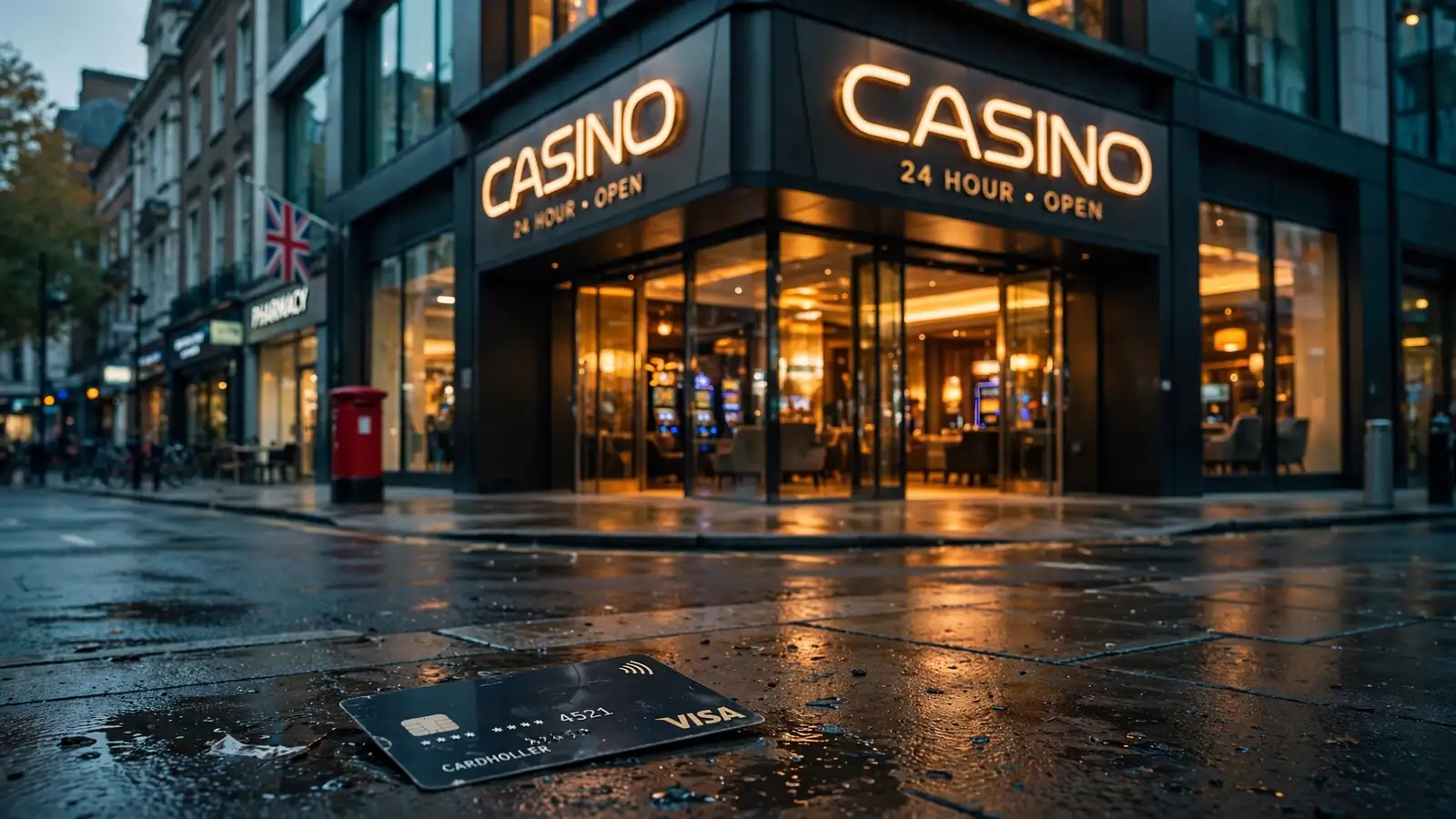
Table of Contents
- Wirecard and the UK Casino Cashier
- What Can Replace a Wirecard Deposit?
- Deposits, Promotions and the Small Print
- Mobile Slots Still Depend on the Cashier
- Real-Money Slots and the Limits Set Before Play
- Deposits Are Not Withdrawals
- Bonuses Without a False Promise
- Minimum Deposits and Account Limits
- Comparing the Real Cost of an Alternative
- GamStop, Payment Routes and UK Safeguards
Wirecard and the UK Casino Cashier
The phrase “casinos that accept Wirecard in the UK” suggests a neat directory: a name, a payment logo and a deposit button. In practice, the cashier is less like a permanent shop window than a live set of permissions. What appears there can depend on the casino, the account and the particular payment product. A list of UK casinos should not be presented as confirmed Wirecard destinations without current, operator-level confirmation.
That distinction matters in 2026, when old payment references can linger online long after a cashier has changed. A page may repeat a brand name, or group it with familiar card schemes, without establishing that the method is available to a UK customer at the point of deposit. Search results and old descriptions are not transactions. The decisive detail is whether Wirecard itself is displayed and accepted in the casino’s current cashier for that account.
There is a separate, more established picture for ordinary card payments. A specialist review of casino payment options lists Visa and Mastercard, and UK casinos commonly accept debit cards bearing those schemes. That does not settle whether a specific card product will work at a specific site today. Current UK availability and card eligibility still need to be checked in the cashier; a familiar logo is not a blanket approval.
The distinction between a scheme and a card product is easy to miss. Visa or Mastercard may identify the network, while the underlying card has its own issuer, account type and payment permissions. A cashier can list a scheme yet decline a particular card. Conversely, a card’s appearance does not establish which payment route the operator will recognise. The brand on the plastic is only one part of the transaction.
Wirecard’s name alone cannot resolve those details. It does not establish that a casino supports a deposit, that a card linked to the brand is eligible, or that the cashier will treat it as a permitted card payment. Nor does a payment reference elsewhere prove that the same route is open to UK accounts now. Availability belongs to the operator’s live payment process, not to a name in a directory.
Mr Play Casino UK Payments: GBP Deposits & Fast Cashout
For a UK-licensed casino, another distinction is legally important: credit-card payments for gambling are prohibited. That does not mean every card transaction should be described as a credit-card payment, or that a Wirecard-branded product should be assumed to be a debit card. The product and funding route matter. Remote gambling operators cannot accept credit-card payments for gambling, including credit-card funds routed through a money service business. A payment method’s label cannot override that rule.
The cashier therefore answers a narrower question than a broad “all Wirecard casinos” list appears to answer. It can show which methods the operator makes available for that transaction; the account terms and payment instructions determine whether the selected product qualifies. If Wirecard is not shown, a third-party list cannot make it an available option. If it is shown, the displayed instructions still matter.
There is little value in treating a casino as a confirmed Wirecard site merely because Visa or Mastercard appears among its payment marks. Those are separate claims. The presence of either card scheme is relevant to card deposits in general, but it is not proof of Wirecard acceptance, nor confirmation that every card linked to a scheme is eligible. The distinction is small on a logo strip and decisive at the point of payment.
Account ownership is another practical part of that point. Using account details and a payment route belonging to the same customer can reduce avoidable friction over basic ownership checks. A mismatch between the casino account and payment details may prompt questions that a matching route would not. That is not a special property of Wirecard; it is a straightforward consequence of linking a transaction to the person making it.
The most accurate answer to whether Wirecard casinos are still available in the UK is therefore not a confident catalogue. A casino’s current cashier must establish the method for itself. Visa and Mastercard have a broader, recognisable role in UK casino payments, but even those names do not remove the need to check the particular card and current cashier. A logo is not a promise.
Credit Card Ban
Remote gambling operators in the UK are prohibited from accepting credit-card payments for gambling, including funds routed through money service businesses.
Top online casinos in the UK
- SlotoSportBonus: 500% up to £ 10 200+ 777 FS · Payout speed: 1-3 business days
- x3betBonus: Welcome Pack 100% Up to £1.000 + 200 Free Spins · Payout speed: 1-3 business days
- DieselwinBonus: Welcome Pack 250% up to £4000 + 200 FS · Payout speed: 1-3 business days
- WinBeastBonus: €5000 + 500 FS + €650 Freebet · Payout speed: 1-3 business days
- JetsetspinsBonus: 200% Bonus + 100 Free Spins + Free Royal Wheel · Payout speed: 1-3 business days
- SpinFormulaBonus: 550% Up To £15,000 + 550 FS · Payout speed: 1-3 business days
- NightLuckBonus: Welcome Pack + 805% Up To 6400€ + 280 FS · Payout speed: 1-3 business days
- ChanzeBonus: Slots Welcome Bonus #1 200% up to €500 · Payout speed: 1-3 business days
- ZombillionBonus: Welcome Pack 250% up to £4000 + 200 FS · Payout speed: 1-3 business days
What Can Replace a Wirecard Deposit?
When a payment card or account is not available in a casino cashier, the alternatives are not interchangeable. Some methods move money directly from a bank account; others use a separate wallet or a prepaid voucher. What appears at a particular site depends on its cashier and the account being used. A payment brand familiar from one casino is not a promise of availability at another.
Cards and bank payments
Debit cards remain a straightforward alternative to investigate. UK casinos commonly accept Visa and Mastercard, although the cashier still determines whether a particular card product can be used. A card logo is not a guarantee that every card bearing it will work. Credit-card payments for gambling are prohibited at UK-licensed casinos, so a credit card should not be treated as a substitute.
Bank transfers and open banking offer a different route: funds move from the customer’s bank rather than through a prepaid balance. A specialist review describes open banking and bank transfers as methods that can support instant deposits and fast withdrawals at many sites. That is a description of some operators, not a universal timetable or a promise that every cashier supports the same service. Bank payments may also appear under a service name rather than simply as “bank transfer”, so the cashier’s wording matters.
A bank route can suit someone who prefers transactions to sit visibly alongside ordinary banking activity. It also makes ownership details relevant: using a payment route held in the same person’s name as the casino account can reduce avoidable friction over who controls the funds. The principle is plain; the cashier’s available choices are not.
Casinos That Accept Zimpler in the UK
Prepaid vouchers and e-wallets
Paysafecard is a prepaid voucher for deposits only. That distinction matters when comparing it with a card or bank route: a deposit method is not automatically a way to receive winnings. A voucher may keep a gambling transaction separate from a bank-card payment, but it should not be mistaken for a complete deposit-and-payout arrangement.
E-wallets sit between a bank account and a casino cashier. PayPal is known for speed and convenience, while Skrill and Neteller are offered by some sites. Availability is operator-specific; an account with a wallet provider does not mean every casino will accept it. Specialist reviews describe Skrill as one of the more common deposit methods at UK-facing casino sites in 2026, but that broad observation cannot settle whether it is listed at an individual cashier.
Wallets also bring their own conditions. A casino may recognise a wallet for deposits but treat it differently from a bank transfer or debit card in other parts of the account. A specialist review notes that Skrill and Neteller can be excluded from promotions at some sites. That is a reason to read the offer’s payment terms alongside the cashier options, not to assume that a wallet always blocks a bonus or always qualifies for one. The detail belongs to the operator.
Choosing by function, not by label
The useful comparison is therefore between functions. A debit card is a card-based route; open banking and bank transfers connect to a bank account; an e-wallet holds a separate balance; Paysafecard is a deposit-only voucher. Those categories clarify what each method does, but they do not establish which brands a particular casino accepts or whether one route can handle both deposits and withdrawals.
Debit Cards
Straightforward card-based routes, commonly using Visa and Mastercard schemes.
Bank Transfers
Funds move directly from the bank account, including options for open banking.
E-Wallets
Digital balances provided by services like PayPal, Skrill, and Neteller.
Prepaid Vouchers
Deposit-only options, such as Paysafecard, used to separate gambling from bank accounts.
This is where a search for a direct Wirecard replacement can become misleading. A name that seems similar, or a method that appears beside it in a list, is not necessarily a like-for-like substitute. A voucher, for instance, cannot be assumed to cover payouts. Nor should a wallet be selected solely because it is familiar: its casino availability and the operator’s terms still govern its use.
The cashier is the practical record of what the casino supports at the time of a transaction. It may show several methods, only a subset of the options described in general reviews, or different choices after login. Account details should match the payment account, and the method’s own conditions should be understood before funds are sent. A tidy payment route is often the less dramatic one: one named account, used consistently, with no borrowed details.
No single alternative reproduces every feature of another payment service. Bank-linked options may be direct; wallets separate the casino transaction from the bank interface; prepaid vouchers limit their role to deposits. The right comparison is not a ranking detached from the cashier, but a check of what is actually offered and what the chosen method can do. Labels travel widely. Acceptance does not.
Deposits, Promotions and the Small Print
A deposit method can do more than move money into a casino account. It can also determine whether a promotion is available. That distinction matters because seeing a payment option in a cashier does not establish that a deposit made with it will qualify for an offer.
PayPal illustrates the gap. It is popular for speed and convenience, but a specialist casino review reports that it may be excluded from bonus eligibility. That is a report about a possible condition, not a rule shared by every casino. A promotion’s own terms are the relevant authority: they may name excluded payment methods, limit eligibility to particular deposits or set other conditions.
Casinos That Accept Upaycard in the UK
Skrill and Neteller present a similar complication. Specialist casino reviews describe them as available at some sites and often excluded from promotions. “Often” is not “always”: eligibility can differ between operators and offers, and terms can change. The useful distinction is between a method being accepted for deposits and being accepted for a qualifying promotional deposit. Those are separate decisions.
This can make the cashier feel less like a simple list of buttons and more like a set of doors, each with its own small print. An e-wallet may be usable for ordinary deposits while being omitted from the payment routes eligible for a welcome offer. Conversely, the presence of a method among exclusions in one offer does not establish that it is excluded from every promotion at that site.
The order of checking matters. Promotional terms should be read before a deposit, not after it has been made. The relevant wording may explain which payment methods qualify, whether an offer must be activated, and whether a deposit through a particular route affects participation. Where the terms are unclear, the operator’s support team can clarify the rule before money is committed. A banner is not a substitute for conditions.
This is especially important when a player is considering a card marketed under a particular brand. A search for Wirecard casinos with free spins or a no-deposit offer does not establish that any such promotion exists, or that Wirecard would qualify for it. Nor does an offer’s existence prove that the card is accepted. Payment availability and promotional eligibility need to be established independently; neither can be safely inferred from the other.
Do
- Read promotional terms before making a deposit
- Check the cashier for current method availability
- Clarify rules with support if terms are unclear
Don’t
- Assume a payment badge guarantees bonus eligibility
- Rely on a general list instead of the live cashier
- Infer payment availability from a promotion’s existence
The same caution applies to offers described as “no wagering” or “no minimum deposit”. Those phrases describe promotional terms, not payment compatibility. A promotion may have its own eligibility rules, while the cashier may have different rules for deposits. The label alone cannot show whether a particular card, e-wallet or other route is permitted.
There is a small social history in this separation. Promotions are designed to encourage deposits, while payment systems carry their own restrictions and identities. The casino’s terms mediate between them, deciding which transaction counts for the offer. Convenience at the payment stage, therefore, does not necessarily carry through to the promotional stage. The attractive button and the qualifying deposit may not be the same thing.
For anyone comparing an offer, the practical record is simple: note the payment method, the offer’s eligible methods and any exclusion stated in the terms. If an account has already been funded through a method that does not qualify, a bonus may not attach; whether it can be changed or applied later depends on the operator’s rules. No assumption should be made from the payment brand alone.
A promotion is conditional by design. The method that gets money into an account may be precisely the method the offer leaves out.
Mobile Slots Still Depend on the Cashier
A slot game opening on a phone is not evidence that Wirecard can fund it. The game and the cashier perform different jobs: one displays the play, while the other handles deposits. A casino’s mobile site may make its games available on a small screen without offering every payment route there. The distinction is easy to miss when both features sit behind the same account.
Casinos That Accept Giropay in the UK: What to Check
For that reason, Wirecard support for mobile slots in the UK cannot be treated as confirmed. A game’s presence in a mobile lobby does not establish that a Wirecard-linked payment will appear at the deposit stage, still less that it will be accepted for real-money play. The relevant detail is the cashier’s current list of methods for that account and device. A familiar logo elsewhere on the site is not a substitute.
Free play and real-money play are also separate arrangements. A slot that can be opened without a deposit does not demonstrate that Wirecard is available for funding. Nor does a successful sign-in on a phone settle the question: access to an account and permission to use a particular payment product are separate matters. The cashier remains the practical boundary.
Card labels require similar care. A specialist review may list Visa and Mastercard, but that does not establish current UK availability for every account or every card product. Eligibility needs to be checked in the casino cashier. The brand name alone cannot settle whether a particular card is accepted for a transaction.
Apple Pay offers a clearer, limited point of comparison: some UKGC-licensed casinos accept it for deposits. That is not a claim that every licensed casino supports it, that it works on every mobile device, or that it can be used for withdrawals. Deposit availability and payout arrangements are distinct. A payment option appearing in one place should not be read as a promise about every part of the account.
Apple Pay is accepted for deposits by some UKGC-licensed casinos, but this does not guarantee support across all devices or for withdrawals.
This separation reflects the ordinary architecture of online gambling: the game is the visible entertainment, while payment acceptance is governed by the operator’s account and cashier processes. The phone changes the screen, not the operator’s obligation to control how money enters a gambling account. The modern slot may travel in a pocket. Its cashier still keeps its own rules.
A careful check therefore means looking at the payment options presented inside the account rather than inferring support from a mobile game catalogue, a promotional image or a general list of card brands. If Wirecard is not shown as an available deposit method there, mobile access alone supplies no reason to assume it will work. The distinction is less glamorous than the reels. It is the one that matters.
Real-Money Slots and the Limits Set Before Play
A real-money slot session begins before the first spin, with an account decision that has little to do with the game itself. Remote gambling licensees must ask new customers to set a financial limit before they make their first deposit. They must also make account-level limit controls accessible afterwards. The sequence is deliberate: a boundary is not merely a tool offered once spending has begun; it is part of opening the account for gambling.
That requirement puts a small pause between registering and funding an account. The limit belongs to the customer’s account, rather than to a particular slot, device or payment route. Searching for a way to play slots for money with Wirecard does not change that order. A cashier method and a financial limit answer different questions: one concerns how money might enter an account, the other how much the account is permitted to lose or spend under the customer’s chosen controls.
Casinos That Accept Interac in the UK: Payment Guide
There is a wider idea behind this design. Gambling has long been sold as a private pastime, yet its consequences do not remain private when losses exceed what someone can afford. Account controls make the operator part of the setting in which play occurs. The prompt before the first deposit is a modest intervention, but its timing matters: it arrives before the transaction that turns an account from a place to browse into a place to gamble.
For slots, personal limits sit alongside rules that apply to the game itself. In Britain, the maximum stake per game cycle is £5 for customers aged 25 and over, and £2 for those aged 18 to 24. The £5 ceiling for adults came into effect on 9 April 2025. These are statutory stake limits, not substitutes for account-level controls. A permitted stake does not establish that a particular session is affordable; the account limit and the game rule operate at different scales.
Nor does a payment label settle whether real-money play is appropriate or available. UK-licensed remote gambling operators must verify a customer’s age before allowing a deposit, and online gambling is legal in the UK for adults aged 18 and over where the operator holds a UK Gambling Commission licence. Those conditions frame access; they do not promise that any particular slot site, app or payment method will accept a transaction.
The useful distinction is between the limit chosen for an account and the ceiling imposed on an individual slot stake. One is a personal financial control; the other is a rule on play. Neither turns a deposit into disposable income, and neither can make an unsuitable session safe by itself.
A pause before play.
Stake Limits
Statutory maximum stakes per game cycle are £5 for adults 25+ and £2 for those aged 18 to 24.
Deposits Are Not Withdrawals
A card deposit may appear in a casino account almost at once. That says little about how quickly a later withdrawal will reach a bank account. A specialist casino review describes the contrast plainly: a card payment can be instant, while a payout may take several business days. The two movements pass through different checks and processes.
For UK gambling accounts, anti-money laundering controls commonly require winnings to be returned to the payment source used for the deposit. This closed-loop approach is intended to reduce fraud and make the movement of money easier to trace. A request to withdraw to a different route may therefore prompt questions or additional checks rather than provide a shortcut.
The payment name alone is not enough to establish where money can go. A casino may have to confirm that the account and payment instrument belong to the same customer, and that the proposed return route is available for that transaction. Keeping account details and the payment route under the same customer’s name can reduce avoidable friction. It does not remove the casino’s checks.
There is also a pause between requesting a withdrawal and its arrival. A specialist review notes that the casino’s internal approval forms part of the processing time, and that a first withdrawal can take longer while verification is completed. KYC may involve confirming identity and payment ownership before funds are released. Once approved, the provider or bank still has to process the transfer.
Casinos That Accept Litecoin in the UK: Payment Checks
That is why “instant deposit” and “fast withdrawal” are not interchangeable descriptions. A quick deposit confirms only that money entered the casino balance; it does not promise an equally quick route back. The cashier’s stated withdrawal options, the casino’s approval procedure and the status of the account all matter. A Wirecard-branded payment route, where one is available, would not by itself establish that direct withdrawals are supported or immediate.
The distinction is practical, not merely technical. A balance displayed on screen is not the same as money received in a bank account, and an approved request is not necessarily a completed transfer. The timing can change at each stage.
For a player considering a withdrawal, the useful details are therefore the casino’s rules on returning funds to the original source, its verification requirements and the status shown for the request. Deposit speed answers one small question. The journey back is another matter.
Bonuses Without a False Promise
A casino’s willingness to take a payment and its willingness to count that payment towards a promotion are separate decisions. A deposit can go through while the bonus attached to it remains unavailable. That distinction matters for anyone looking at Wirecard casinos and welcome offers: a payment badge, even if shown in a cashier, does not by itself establish that a Wirecard-funded deposit qualifies for a particular deal.
The terms attached to each promotion carry the practical answer. A welcome bonus, a slots offer and a bonus code may each have their own payment exclusions. The same caution applies to a no-deposit offer: its label says nothing about whether a particular account or payment route is eligible. There is no sound basis for treating Wirecard as a shortcut to a bonus, or for assuming that a promotion will appear simply because a deposit method is accepted.
E-wallet Promotion Caveats
Specialist reviews report that PayPal may be excluded from bonus eligibility, while Skrill and Neteller are often excluded from promotions at some sites.
E-wallets illustrate the divide. A specialist casino review reports that PayPal, valued for speed and convenience, may be excluded from bonus eligibility. A specialist review also reports that Skrill and Neteller are offered at some sites but are often excluded from promotions. These are reported conditions, not rules shared by every casino; payment and promotional policies can differ between operators and offers.
The consequence is modest but easily overlooked: choosing a method for a quick or familiar deposit may narrow the promotions available with it. That does not make an e-wallet unusable, nor does it mean every offer excludes it. It means the method and the offer need to be considered together rather than as separate promises.
A bonus code does not settle the issue either. Its associated terms determine whether the deposit method is allowed, while the cashier indicates which payment routes are currently presented for the account. Both details matter. The offer headline is the shop window; eligibility sits in the small print.
For Wirecard-branded slots promotions, the responsible expectation is therefore limited. A casino may advertise a welcome offer or a code, but the promotion should not be treated as Wirecard-compatible unless its terms say so. The same applies to claims of real-money play combined with a bonus: payment access and promotional access are not interchangeable. A bonus is conditional, not an automatic companion to a deposit.
Minimum Deposits and Account Limits
A small deposit threshold is not a special feature of Wirecard. It is a cashier setting, and the amount shown can depend on the payment route selected. A specialist casino review puts stated minimum deposits in the £10–£20 range, with the precise figure varying by method. That is a reported range, not a promise that every cashier will accept a deposit at its lower end.
Casinos That Accept E-Checks in the UK: What to Check
A £5 deposit should not be assumed to work simply because that amount is entered. The cashier sets the minimum for the chosen route, and a rejected transaction may reflect that threshold rather than a problem with the account itself. For Wirecard in particular, the amount cannot establish whether the payment method is supported; availability and the minimum are separate questions.
The ceiling works differently from the floor. Casinos may set maximum deposits per transaction, per day or per month, and those ceilings can differ by payment method and account status. A limit displayed for one route therefore does not necessarily apply to another. Account checks can also affect what is permitted, so a limit may not remain identical across every stage of an account’s use.
There is a second kind of limit, set by the customer rather than the payment processor. UKGC rules require remote gambling licensees to prompt new customers to choose a financial limit before their first deposit and to make account-level limit controls accessible. This is a safeguard around spending, not a promise that a deposit of any particular size will pass. The cashier’s transaction minimum and the account’s financial limit serve different purposes.
The distinction matters when a low starting amount is part of a decision about where to play. The deposit minimum answers what the cashier will accept through a particular route; the account limit concerns the customer’s chosen boundary. Neither confirms Wirecard compatibility, and neither guarantees that a later deposit will be available on the same terms. Small print, made practical.
Deposit and Account Limits
- Minimum deposits typically range from £10–£20 depending on the method
- Maximum transaction limits can vary by payment route and account status
- UKGC rules require customers to set a financial limit before their first deposit
- Transaction minimums and personal financial limits serve different purposes
Comparing the Real Cost of an Alternative
A payment method can look inexpensive at the cashier and still cost more by the time money reaches a casino account. The visible charge is only one part of the calculation. A casino may apply a fee; a payment provider may add its own; a bank or card issuer can impose a charge; and currency conversion or network costs may sit elsewhere in the transaction. The labels differ, but the balance bears them all.
That is why there is no single cheapest replacement for Wirecard across every UK casino and transaction. The comparison depends on the actual amount, the account currency, the route used and the charges applied at each point. A method with no stated casino fee is not necessarily free. Its provider, bank or exchange rate may still change the final cost.
Currency deserves particular attention. When an account and payment route use different currencies, the exchange rate may include a spread: a margin between the market rate and the rate applied to the transaction. A specialist payment review notes that this spread can exceed a flat fee shown openly. The fee that announces itself is not always the largest one.
A useful comparison follows the money from source to casino rather than stopping at the cashier’s confirmation. Check whether the casino lists a charge, whether the provider publishes a transaction fee, and whether the bank or issuer treats the payment differently. Then check the exchange rate and any network cost. A GBP account can avoid a conversion charge only if the casino account and payment are both handled in pounds; the account currency should be confirmed before the first transaction.
The same discipline applies to any proposed alternative, whether it is a card, bank route or digital wallet. Names alone do not reveal the net cost, and a low-cost result for one deposit does not establish the cost of another. Compare like with like: the same amount, currency and casino, with each possible charge included. If the cashier or provider does not make a cost clear, that uncertainty belongs in the comparison rather than being treated as zero.
Casinos that accept Klarna in the UK: payment guide
The cheapest route is not a permanent property of a brand. It is the outcome of a particular transaction.
GamStop, Payment Routes and UK Safeguards
A casino described as “not on GamStop” is not, by that label alone, a safe alternative or a payment option. GamStop concerns self-exclusion; Wirecard concerns a payment route. One does not establish the other. A site’s position on the scheme cannot verify that its cashier accepts Wirecard, and a Wirecard logo or claim cannot establish that the site is properly licensed.
For gambling offered to people in Great Britain, the decisive distinction is regulatory. A remote operator selling into that market must hold the relevant UK Gambling Commission licence, wherever the operator is based. Offshore casinos sit outside the UKGC system. Their accessibility does not make them part of the British licensing framework, and a description such as “not on GamStop” should not be read as evidence of equivalent UK protections. The boundary matters.
There is a social reason these labels attract attention: a payment brand sounds like a practical detail, while self-exclusion carries the weight of a decision already made. Treating a casino outside that scheme as a workaround turns a safeguard into a marketing category. It also leaves the separate questions of licensing, account controls and payment compatibility unanswered.
UKGC-licensed remote operators must build financial controls into the account, not leave them as an afterthought. New customers must be asked to choose a financial limit before making their first deposit, and controls for setting or changing account limits must remain accessible. These are operator obligations, not features that a Wirecard deposit can switch off. Nor does a payment method determine whether a casino participates in GamStop.
The practical distinction is plain: GamStop status and Wirecard acceptance are separate checks, while a UKGC licence determines whether a casino is operating within Britain’s regulated system. No claim about a Wirecard-enabled site outside GamStop should be mistaken for confirmation of that licence or of comparable safeguards. A payment route is not a regulatory passport.
What is the fastest withdrawal method for UK casinos?
PayPal, open banking and debit cards linked to fast payout systems are generally among the quickest options. The casino’s approval process and whether your account is fully verified also affect how soon you receive the money.
Can I deposit in GBP?
Yes, GBP is supported. Check your account currency before depositing to avoid currency conversion.
Which payment methods are accepted in Great Britain?
UK casinos commonly accept Visa and Mastercard debit cards; bank transfers, open banking and e-wallets are also available at some sites. Check the casino’s cashier for its current options, as availability varies.
Written by the editors at mr Play.